

If you've ever looked at a branding quote and wondered whether you'll ever see that money again, you're in good company. So let's be straight: branding is worth it when it does at least one of four things for the business. Do one or more of them and the money comes back, often several times over. Do none of them and you've bought some cute designs that look nice but do absolutely nothing for you.
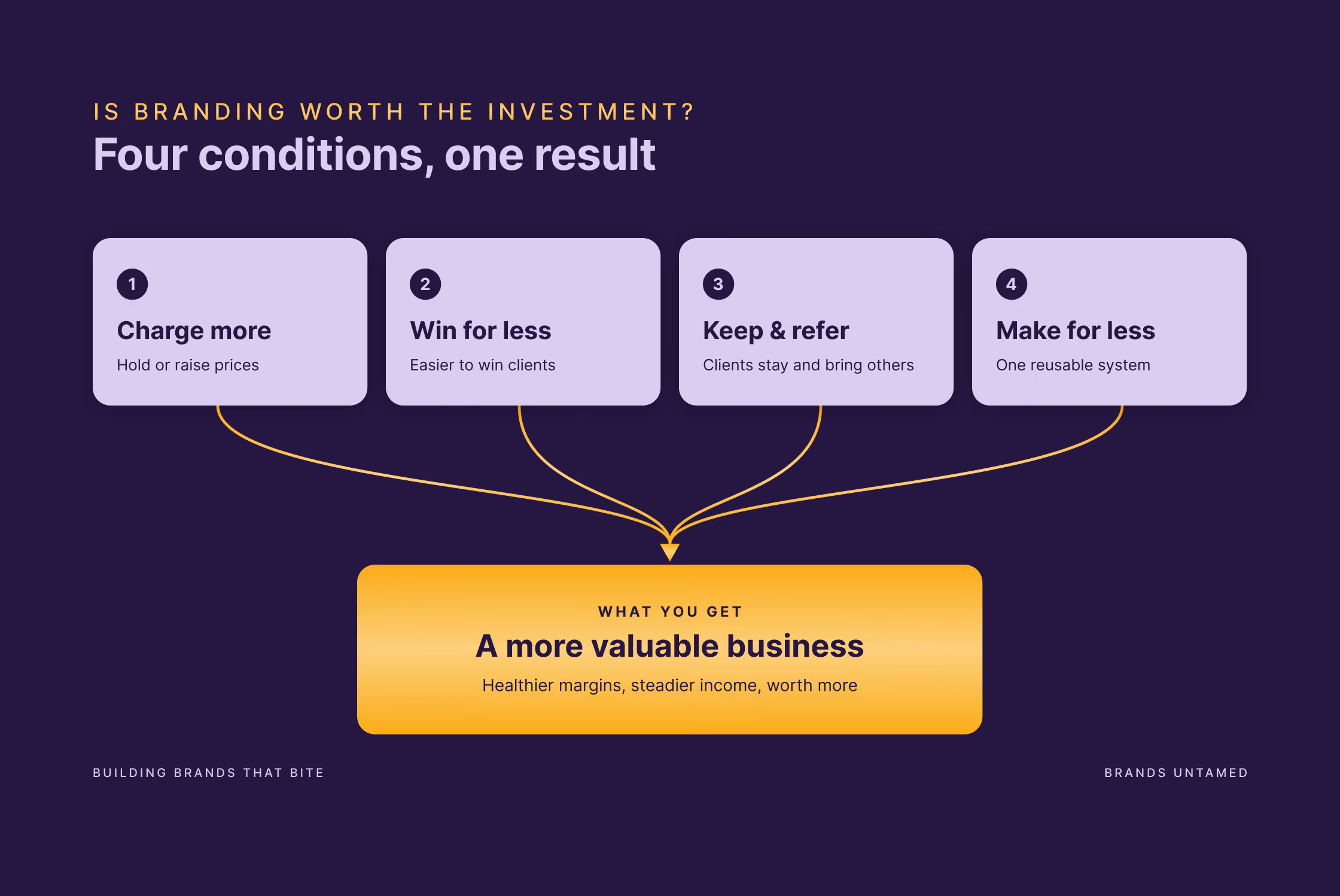
The useful question is which of the four you're really buying, and that's something you can work out before you spend anything. Branding pays back when it does at least one of these:
- Charges more for you. You can hold or raise your prices without losing the work.
- Wins clients for you. You’re remembered and shortlisted before buyers are even shopping.
- Keeps clients for you. People stay longer, and send others your way.
- Costs you less. Producing your day-to-day work gets faster and cheaper.
Here's how each one works, and how to tell whether yours qualifies.
First the uncomfortable part: plenty of branding doesn't pay back
Before we get into the four, let's be honest for a second. A lot of money spent on branding never comes back, and the people who suspect as much aren't cynics. A new logo on the same tired website. A colour palette nobody outside the marketing team will ever notice. A 60-page brand book that goes straight into a shared drive and gets opened twice. None of that touches revenue. It's redecoration, and redecoration is a cost, not an investment.
The four conditions below are the difference between the two. You don't need all four. You do need at least one.
1. It lets you charge more (and lose fewer clients when you do)
The most directly proven thing a strong brand does is hand you pricing power. Les Binet and Peter Field, in their IPA report The Long and the Short of It, went through a database of around a thousand advertising effectiveness cases collected over thirty years. They found that without a strong brand, pricing power doesn't improve and profit growth takes a real hit. Put simply: a weak brand competes on price, because it's got nothing else to compete on.
For the sectors we work in, it comes down to risk. Someone choosing an association to join is making a public call they can't easily undo, and getting it wrong is expensive. A brand that looks established, consistent and senior reads as the safer bet, and people will pay a bit more to feel safe. That premium is the payback. Wrap that same expertise in a cheap-looking brand and you've handed the client a reason to negotiate. A senior-looking one takes that reason away.
The test is simple. Are you winning on fit and trust, or are you forever being asked to knock something off the price? If every deal turns into a haggle, your brand isn't doing this job yet. If you can hold or nudge up your rates and still get the yes, it is.
2. It wins the right clients more easily, and for less effort
This is the biggest of the four for anyone selling something expensive and infrequent.
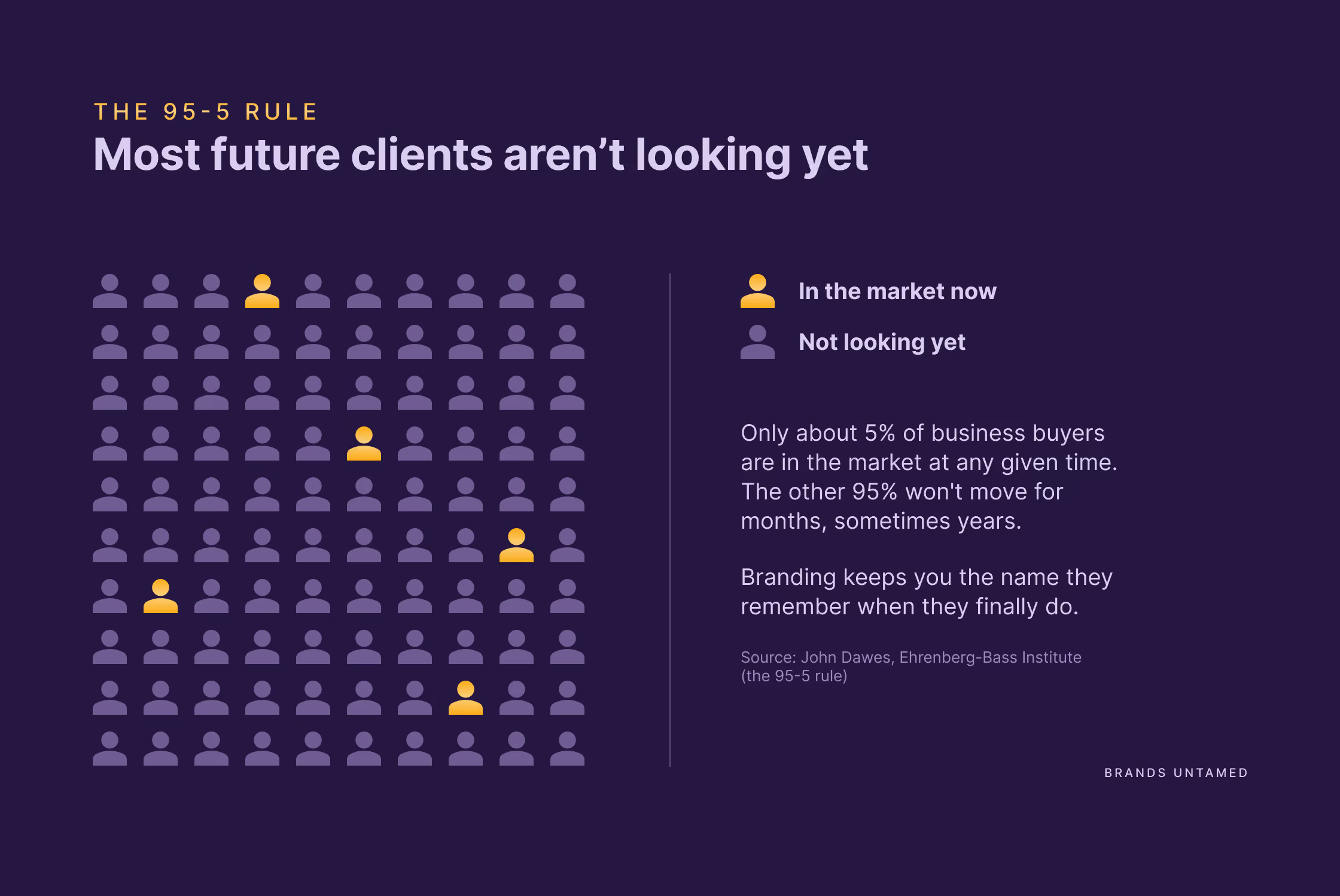
Most of the people who'll eventually choose you aren't looking “right now”. John Dawes at the Ehrenberg-Bass Institute put a number on it in his 95-5 rule: at any given moment only around 5% of business buyers are in the market, because organisations change their providers (their bank, their law firm, their main suppliers) roughly once every five years. The other 95% are out of market, and will be for months or years. You can't sell to them today. What you can do is be the name they remember when they finally do start looking.
That's what branding buys: a place in the buyer's memory before they're shopping. Ehrenberg-Bass calls it mental availability, and it's a sharper idea than awareness. Awareness is whether someone recognises your name. Mental availability is whether you come to mind at the exact moment a problem shows up and they start thinking about who to call. And people tend to build their shortlist from names they already trust, before they do any real digging, then pick from that shortlist. Get remembered early and you're on the list. Miss that window and no amount of clever selling reliably puts you back on it.
And you can measure it. Familiarity and trust shorten the sales cycle, lift your conversion, and bring your acquisition cost down because warm, already-trusting buyers are cheaper to win than cold ones. Keep an eye on how many new enquiries arrive already knowing who you are, how often you win, and how long your deals take to close.
3. It keeps the clients you've got, and they bring you others
Now a point most branding articles skip straight past. Loyalty is oversold. The Ehrenberg-Bass research is clear that loyalty mostly comes down to how big and well known you already are, not how nice your logo is. So I’m not going to claim that branding, on its own, buys you loyal clients. It doesn't.
What a clear, trusted brand does do, is cut the reasons to leave, and make it easy for happy clients to send people your way. A consistent presence reassures your clients that they backed the right horse. And a sharp, simple brand gives them something to refer. Vague, forgettable companies are hard to recommend, because the person doing the recommending has to do all the explaining themselves. A company with a clear identity and an obvious thing it's known for hands them a ready-made sentence: you should talk to these people, they do this better than anyone.
Watch your retention, your client lifetime value, and how much new work comes in through referrals. If those are healthy and climbing, the brand's doing its job here.
4. It costs you less to produce everything
The fourth one nobody puts on a slide, because it's unglamorous and internal. But it's still real money. A proper brand system makes everything you produce faster and cheaper to make.
This is the part I can speak to from the inside, because building these systems is a big part of what we do. Without one, every asset is a fresh argument. The team reinvents the layout each time, has the same argument about fonts it had last quarter, and sits waiting on sign-off because nobody's quite sure what "finished" is meant to look like. Bring in a freelancer and they guess, then guess again after the feedback. A brand system (meaning a real working set of templates, rules and components instead of just a logo and a mood board) ends most of that. People know what to make, how to make it, and what counts as done. (For the difference between a logo, an identity and an actual system, we pulled it apart in a separate article.)
I'll be straight that the public evidence for this one is thinner than for the other three, because it shows up in internal time and cost rather than in published studies. But anyone who's run a stretched team without a system knows exactly what it costs: rework, delay, and your senior people losing hours to decisions that should've been sorted ages ago. Watch how much gets remade, how long a typical asset takes from brief to done, and how many approval rounds it needs.
What it all adds up to
Notice that none of those four is "increasing the value of the business", even though that's the one people reach for first. That's on purpose . A more valuable business isn't a fifth thing branding does. It's what you get when the other four are working. Charge more, win clients more easily, keep them for longer, spend less doing your work, and you're left with healthier margins and steadier income. Which is exactly what makes a business worth more.
So if you ever exit, fundraise, or just have to defend your numbers to a Board, that's the figure that counts. Branding won't turn up as its own line in the accounts. You'll feel it in what the whole thing is worth. When someone asks whether branding adds to the value of the company, the honest answer is yes, but only by doing the four things above first. There's no shortcut that skips them.
A quick test before you spend
There's an honest catch with those four. You can't really promise any of them upfront, because a brand takes time to pay back, and anyone who guarantees you a number is guessing. So the test before you spend isn't "will this definitely work". It's "can I see how this work leads to at least one of the four", rather than just making things look nicer. Be honest with yourself:
- Is this built to make us look more senior and trustworthy, in a way that could let us charge more? Or is it the same offer in a new outfit?
- Will it genuinely put us in front of future buyers and stick in their memory? Or will nobody outside the building ever see it?
- Does it give clients a clearer, simpler reason to stay and to recommend us? Or is it just tidying up behind the scenes?
- Will it leave us with a system we'll really use, so the everyday work speeds up? Or is it a one-off that changes nothing about how we work?
If you can't see a believable line from the work to at least one of those, you're buying decoration, and you should either rewrite the brief or keep the money. If you can see a line to two or three, the spend will almost certainly pay back, just not next week. Give it the time we talk about in the first question below.
FAQ
How long before branding pays back?
Depends which of the four you're buying. The internal cost savings (number four) show up almost straight away, as soon as the system's in use. Pricing power can move within a few months. The big one, being remembered and shortlisted, is slower. Binet and Field's data shows brand effects build over the first six to twelve months and then keep growing for years, while short-term sales tactics spike and fade fast. So if you want a quick return, fix the production system first. If you want the biggest return, start building that memory now and be patient. It's slow to build, but once it's there it lasts.
Isn't this only true for big consumer brands?
Fair challenge, because most of the famous research uses large companies. The ideas still apply, though, and they're arguably even more important for small and expert firms. The 95-5 pattern, where almost all your future buyers are out of market right now, is just as true for a boutique law firm as for a soft-drinks giant. And risk reduction, the thing that lets you charge more, counts for most when the purchase is a big, rare decision, which is most professional and B2B buying. You don't need a stadium-sized budget. You need to be consistent, memorable and trusted in front of a much smaller, specific audience.
How do we measure whether it actually worked?
Match what you measure to whichever of the four you were buying. Charging more: are you discounting less and holding your rates? Winning clients: how many new enquiries already know who you are, how often you win, and how long deals take to close. Keeping clients and referrals: how many leave, how much each one's worth over time, and how much work comes in by word of mouth. Production cost: how much gets redone, how long a normal job takes, and how many rounds of approval it needs. None of these is perfect on its own, but watched together over a year they'll tell you straight whether the spend's working.
What if we honestly just need a logo?
Then buy a logo, and don't let anyone talk you into a full rebrand you don't need (and if it genuinely is a rebrand, here's what that really takes). A logo on its own is fine when your offer, your reputation and your existing presence are already working and you just want a tidier mark. You need the bigger investment, a full identity and a working system, when your brand is making you look smaller, slower or less senior than you really are, and that's costing you clients or pricing power.
Is there ever a case where it genuinely isn't worth it?
Yes, two of them. The first is when none of the four apply, which usually means the brand was never the real problem. If clients leave because the service is poor, a new identity won't save you. It'll just make the disappointment better looking. The second is when the money's going somewhere that touches none of the four, like a refresh nobody outside the building will ever notice. Fix the underlying problem first, then brand it.
We're tempted to do it cheaply. Bad idea?
Cheap is the false economy that nearly always costs more, because branding that doesn't land has to be redone, and you end up paying twice. Once you've decided the investment's worth it, the question is who does it well, not who does it cheapest. We've written separately on why cheap design costs more than you think and on how to choose between a studio, a freelancer and a large agency, both worth a read before you commit a budget.
If this is the decision you're sitting on
Knowing the four conditions is one thing. Building a brand that genuinely meets them, an identity and a system that change what you can charge, who remembers you, who stays and what your output costs to produce, is senior work. It's the work we do. If you've decided the investment's worth it and you want it done by people who'll hold it to those four, that's a conversation we're happy to have.