

.avif)
A great creative brief has very little to do with templates, checklists, or filling in the right boxes. The briefs that lead to the best work all have something in common: they explain the problem clearly, give the creative team enough context to think strategically, and leave room for them to do what you hired them to do.
The ones that lead to three painful rounds of revisions? They usually skip at least one of those things.
We've been on the receiving end of hundreds of briefs over the years. Some were two paragraphs long and gave us everything we needed. Others were fifteen-page decks that somehow still left us guessing. The length itself doesn't matter. All that matters is that you’re clear.
If you're working with an external creative partner for the first time, or if past collaborations haven't gone as smoothly as you'd hoped, this is what we'd want you to know before that first kickoff call.
Brief the problem, not the deliverable
This is the single, biggest shift you can make, and it will change the quality of every creative collaboration you have going forward.
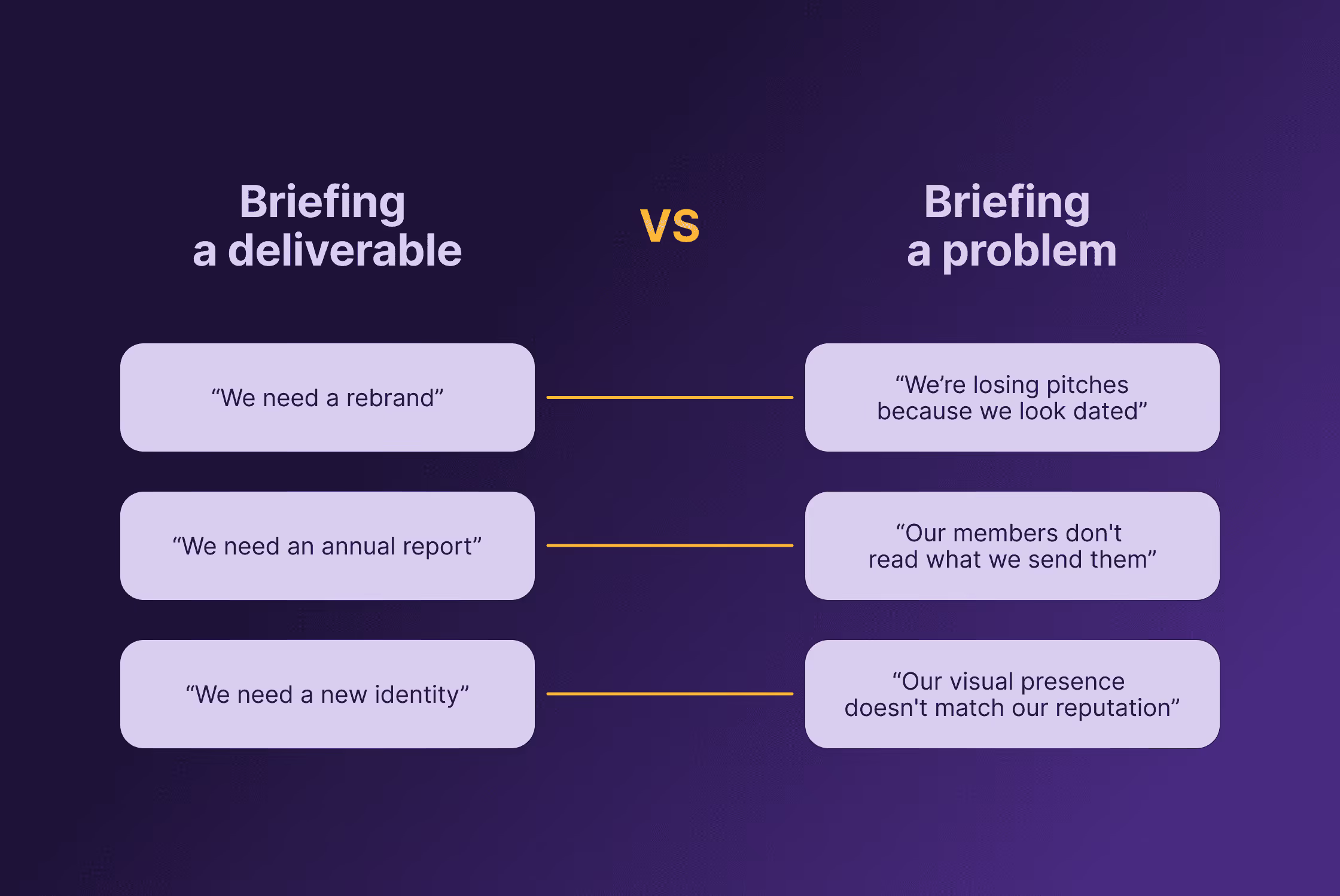
Most briefs start with the deliverable. "We need an annual report." "We need a brand refresh." "We need a new visual identity." And sure, you might end up with all of those things. But the deliverable is the output. What matters for the brief is the input: what's the actual business problem you're trying to solve?
"Our brand looks dated and we're losing pitches to competitors who look more professional" is a fundamentally different brief than "we need a rebrand." The first one gives a creative team something to solve. The second one gives them something to decorate.
When you start with the problem, something interesting happens. Your creative partner might challenge the deliverable altogether. Maybe you don't need a full rebrand. Maybe your brand strategy is solid but the visual execution has drifted, and what you actually need is a tightened identity system with clearer guidelines. A senior partner will push back on the brief if they think there's a better route to the outcome you want. But they can only do that if you've told them where you're really trying to get to.
The simplest test: if your brief could be handed to five different agencies and they'd all produce roughly the same thing, you've briefed a deliverable. If they'd each come back with a different strategic approach, you've briefed a problem.
Be honest about budget (yes, really)
We know. Nobody likes talking about money first. But here's a pattern we've seen play out many times: a brief comes in, it's exciting, the scope is ambitious, we invest serious time in a tailored proposal... and then silence. No response. No feedback.
In most cases, the budget was never going to match the ambition. And nobody said so upfront because it felt awkward or premature.
So we made a rule for ourselves: no budget, no proposal.
And a second one: if the budget feels significantly misaligned with the scope, we'll flag it before investing time in a full offer.
That's not us being difficult. That's us protecting your time as much as ours.
A budget range doesn't limit creativity. It gives it direction. Knowing whether you're working with €5,000 or €50,000 completely changes the strategic approach, the depth of research, the number of concepts, the production quality. Both can lead to excellent work, but they lead to very different kinds of excellent work. When your creative partner knows the playing field, they can design the smartest possible solution within it instead of guessing.
If you genuinely don't know your budget yet, say that honestly. "We're still defining the budget but expect it to be in the range of X to Y" is infinitely more useful than leaving the field blank and hoping the proposal lands in the right ballpark.
Tell us who decides
Few things derail a creative project faster than unclear decision-making. The brief was approved. The concept was approved. The first round of design was approved. And then, three weeks in, someone new enters the conversation with a completely different vision. A board member. A co-founder's partner. A committee that hadn't been consulted yet.
This isn't just frustrating for the creative team, it's also expensive for you. Every late-stage change that comes from a stakeholder who should have been involved from the start costs time, and money.
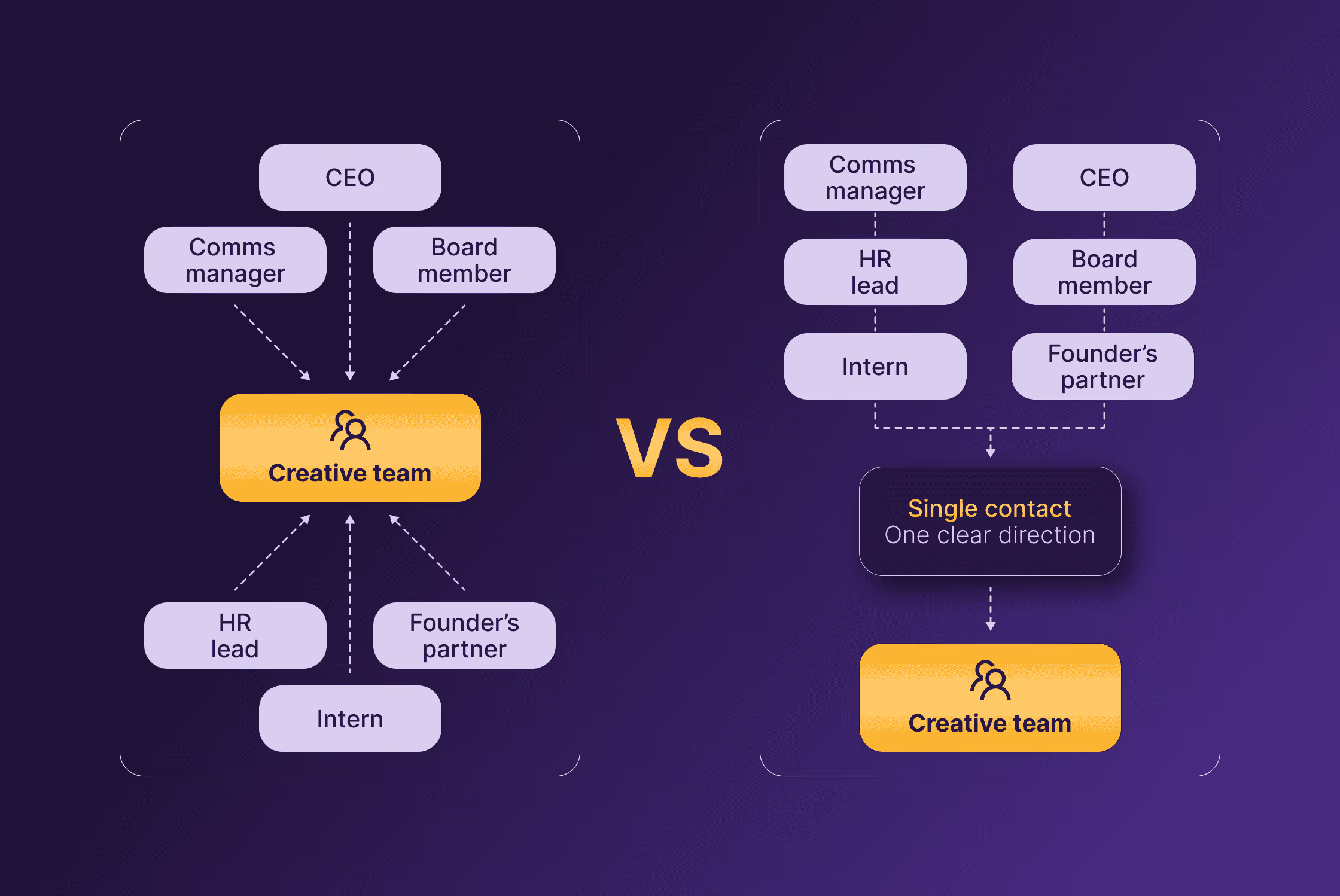
Your brief should answer one question very clearly: who has the final sign-off? And just as importantly: who else will have input along the way, and in which stage?
The ideal setup is a single point of contact who gathers internal feedback and communicates it as one coherent direction. If that's not realistic for your organisation, at least map out the approval chain upfront so everyone knows when their input is expected and when the window closes.
Share inspiration, but tell us what you actually like about it
Reference material is incredibly useful in a brief, when it's specific. "We want something that feels like Apple" is not specific. It's a vibe, and vibes are open to interpretation.
What makes a reference genuinely helpful is a sentence or two of context. Do you like minimalism? The confident use of whitespace? The way copy and image work together? The typography? The colour restraint? Saying "we love how this brand uses short, punchy headlines paired with full-bleed photography" gives a creative team something concrete to work with.
The same goes for negative references, which are just as valuable. "We don't want anything that looks like our competitor's report because the layout feels cluttered and the tone is too corporate" tells us more than ten Pinterest boards of things you like.
Three to five well-annotated references will get you further than thirty links in a mood board with no commentary. Quality of context beats quantity of images.
Hire brains, not just hands
This one's about the relationship itself, and it's worth thinking about before you write a single word of your brief.
If you've hired a senior creative partner, you're paying for strategic thinking, not just execution. A production house expects to be told exactly what to make, pixel by pixel. A senior partner expects to be told what the problem is and then bring their own thinking to the solution.
The brief should reflect which of those relationships you're looking for. If you've already decided on the exact layout, the exact copy, and the exact colour palette, you don't need a strategically-minded team. You need a production partner, and that's completely fine. Different job, different budget, different dynamic.
But if you've hired people for their expertise and perspective, the brief needs to leave room for that. Give clear direction on the what and the why. Be open on the how. Good design thinking goes far beyond knowing the principles. That space between a well-defined problem and an undefined solution is exactly where the best creative work happens.
The strongest briefs we receive tend to be thorough on context and light on prescription. They tell us everything about the organisation, the audience, the goals, the constraints, the politics, the history. And then they trust us to come back with a strategic response that we can challenge and refine together.
Tell us what already failed
This is the one that most people forget, and it might be the most valuable section of any brief.
If you're rebriefing a project that a previous partner didn't quite get right, say so. If you tried a certain messaging approach and it fell on deaf ears, share that. If the last annual report got negative feedback from members, tell us what they specifically didn't like. If your team spent three months on an internal rebrand attempt before deciding to bring in external help, walk us through what happened and where it stalled.
This is very useful context. Every failed attempt contains information about what your organisation actually responds to, what internal politics are at play, and what the real constraints are beneath the surface.
Creative partners who've been doing this for a while know that the graveyard of previous attempts often tells you more about a project than the brief itself. When a client shares this openly, it shows trust. And it saves everyone from walking down a path that's already been proven to be a dead end.
The brief is a conversation starter, not a contract
One final thought. The best briefs we've ever received weren't perfect documents. They were honest ones. They admitted what wasn't figured out yet. They flagged internal disagreements. They said "we think we need X but we're open to being challenged on that."
A brief that pretends everything is settled when it isn't will create problems down the line. A brief that's transparent about the messy bits invites your creative partner into the thinking process early, which is where they add the most value.
Write it, send it, and then get on a call to talk it through. The brief is the starting point of a conversation, not the end of one. And if you're looking for a senior creative team that actually reads the brief properly, you know where to find us.