
How to Get Your Brand Cited by AI: The 2026 Guide to Generative Engine Optimization (GEO)


The shift from traditional search engines to AI-powered assistants is forcing a massive evolution in how companies approach visibility. Whether you run a B2B SaaS company, a global retail brand, or an industry association, Generative Engine Optimization (GEO) is rapidly replacing traditional SEO.
The shift from SEO to GEO
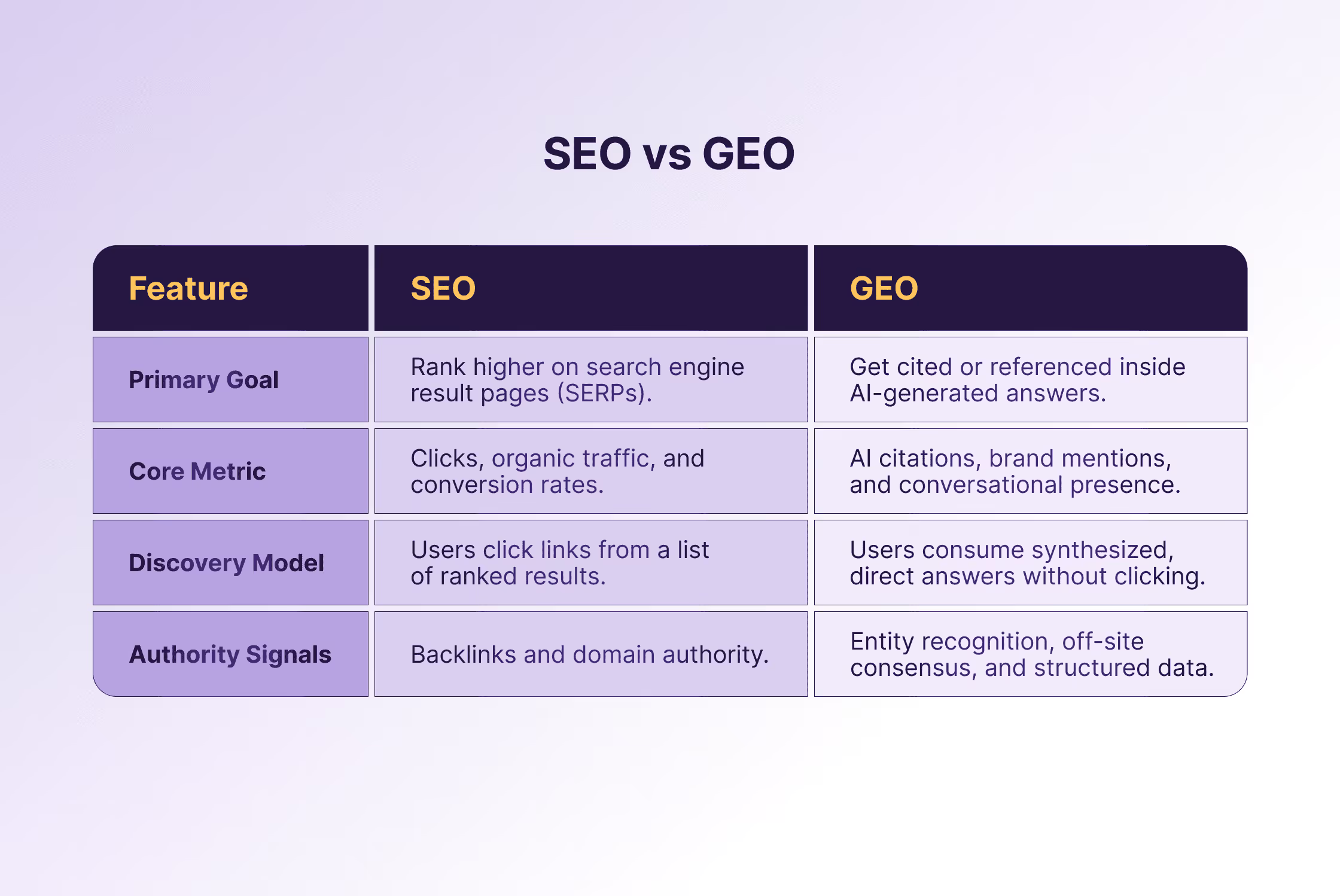
In the past, brands optimized content for web crawlers to rank on a search engine results page. Today, optimization means securing a place in an AI’s training data and real-time retrieval systems. Generative Engine Optimization (GEO) focuses on helping AI models understand, trust, and confidently recommend your brand as the definitive answer to a user's prompt. Early adopters of GEO are already seeing massive gains, with some case studies reporting up to a 540% increase in Google AI Overview mentions.
To understand how to win in this new era, you have to understand how the rules of discovery have fundamentally changed.
Not all AIs are the same: How different LLMs cite brands
One of the biggest mistakes organizations make is assuming all AI models retrieve information the same way. AI platforms are not a monolith; they each use different retrieval architectures and citation logic.
ChatGPT (OpenAI)
ChatGPT prioritizes consensus and broad web presence. Because it is tied to Bing’s index for live searches, it favours high-authority sources like Wikipedia and established industry publications.
- What it rewards: Broad brand mentions across the web, digital PR, and a strong presence in Bing's search index.
- Best for: B2B service providers and brands that already have a strong traditional SEO footprint.
Claude (Anthropic)
Claude operates with a heavier credibility filter. It actively deprioritizes content that makes claims without evidence and heavily favours long-form, research-quality content.
- What it rewards: High domain authority (typically Domain Authority (DA) 70+), deep contextual analysis, and content that includes outbound links to credible studies or methodologies. Claude is 30% more likely to cite well-structured, bullet-pointed pages over generic overviews.
- Best for: Think tanks, associations, and enterprise B2B brands that publish proprietary research and whitepapers.
Perplexity
Perplexity is an answer engine built entirely on real-time web retrieval (RAG) rather than just drawing from a pre-trained model. It is the most citation-dense platform, citing an average of nearly 22 sources per response.
- What it rewards: Freshness, structured data, niche directories, and community platforms. Surprisingly, Perplexity heavily indexes and trusts Reddit discussions and vertical-specific directories.
- Best for: Consumer brands, e-commerce, and fast-moving tech companies where users are looking for up-to-the-minute reviews and comparisons.
How to earn "AI backlinks" across LLMs
1. Reverse engineer your target mentions
To get mentioned by AI, your brand needs to be cited by the sources the AI already trusts. The easiest way to surface PR opportunities is to literally ask the AI. Run prompts like "Which brands offer [your service]?" in ChatGPT or Perplexity and review the exact links they cite in their answers. Pitching journalists or creators from those specific publications is the most direct way to earn high-value "AI backlinks".
2. Earn high-priority "AI backlinks"
Because AI systems synthesize information from multiple sources to provide objective answers, they heavily rely on authoritative directories. If a user asks for the "best software" or "top industry associations," the AI will scrape sites like G2, Capterra, Clutch, Yelp, or specialized directories. Ensure your brand has claimed, complete, and highly-rated profiles on every major platform relevant to your niche.
Traditional backlinks still matter, but LLMs heavily weigh high-quality, structured sources like academic papers, reputable news outlets, established directories, and encyclopedias. Publishing original, proprietary research and pitching it to journalists or creators who are actively covering your topic is one of the most effective ways to earn these high-value mentions.
3. Leverage key opinion leader (KOL) authority, for example on LinkedIn or podcasts
AI models prioritize sources with strong domain expertise and clear authorship. For associations and B2B brands, AI heavily trusts the personal LinkedIn profiles, published whitepapers, and podcast interviews of your executives. Continue publishing high-value thought leadership on LinkedIn, explicitly tying those insights back to your company to build a semantic association between your executive's expertise and your brand identity.
AI does not learn about your brand solely from your domain; it looks for off-site consensus. Podcast appearances are highly valuable because transcripts are frequently posted online and fed directly into language-model training sets. Similarly, co-authoring whitepapers, participating in expert panels, and hosting a community Ask Me Anything increase your digital footprint and create a web of references that lend institutional weight to your brand.
4. Optimize for "prompt language", not just keywords
People do not type generic keywords into AI; they ask conversational, highly specific prompts. Instead of optimizing a page for, for example "B2B agency Belgium," optimize for complex buyer scenarios. When an AI reads a webpage, it is looking for a direct, factual answer to the user's prompt. Target long-tail, question-based keywords on your blog, such as, for example, "How much does a B2B rebranding cost in 2026?". Put a clear, bolded, 2-3 sentence summary at the very top of the page, followed by structured headings and bulleted lists to make the content easy for an AI to extract.
5. Focus on AI sentiment and reputation management
Traditional SEO just displays your link, but LLMs actually synthesize sentiment and tone. If a brand has terrible reviews on Reddit or Trustpilot, an AI like Perplexity won't just rank them lower; it will explicitly warn the user that the brand is unreliable. GEO requires active reputation management. You must monitor forums, resolve public complaints, and ensure the off-site consensus about your brand is overwhelmingly positive so the AI confidently recommends you.
6. Implement strong schema and optimize for AI crawlers
Even the best content cannot be cited if AI crawlers cannot read it. LLM platforms like ChatGPT and Perplexity use specialized bots (GPTBot and PerplexityBot) that often struggle to process JavaScript-heavy, client-side rendered websites. To ensure your content is digested, you must implement server-side rendering (SSR) or static site generation so the text is immediately accessible to the crawler. Additionally, you should keep your robots.txt file permissive for major AI crawlers and utilize structured data (Organization, Product, or LocalBusiness Schema markup) to help the AI systems correctly interpret your brand entities and FAQs without guessing.
Understanding how to secure brand mentions in Large Language Models (LLMs) like ChatGPT, Claude, and Perplexity will strongly position you as an industry leader.

How to track and measure GEO success
Generative engines do not produce traditional SERPs, meaning your standard rank trackers will not work for AI visibility. To measure your GEO strategy in 2026, you need to track AI Share of Voice (SOV) and citation frequency.
Marketing teams should adopt specialized AI brand-tracking tools like Rankshift, Keyword.com's AI Visibility Tracker, or SE Ranking's Perplexity Tracker. These platforms allow you to input your brand name and target prompts, automatically tracking if your brand is mentioned, which competitors are cited alongside you, and whether the AI's sentiment toward your company is positive or negative.
So, do I need to rewrite my entire website?
The short answer is no. You do not need to destroy your brand voice or write like a robot just to appease an AI assistant. Generative engines still rely heavily on traditional search indices (like Google and Bing) to discover content, which means your existing SEO foundation and human-centric storytelling still matter.
Instead of a complete site overhaul, adopt a hybrid approach:
- Keep the creative copy: Maintain your emotional, conversion-focused storytelling for human readers.
- Add AI-friendly summaries: The easiest win is adding a bolded, two-sentence "TL;DR" or Executive Summary at the very top of your core service pages or blog posts.
- Build conversational FAQs: Add robust FAQ sections at the bottom of your pages. This allows you to directly answer the exact, conversational prompts users are typing into ChatGPT without compromising the creative flow of your main landing page copy.
Final thoughts
GEO is no longer an experiment; it is becoming a competitive advantage. Brands that invest early in authority, structure, and off-site consensus will be the ones AI platforms surface with confidence.
At Brands Untamed, we help ambitious brands translate expertise into visibility — so when buyers ask AI who to trust, your brand is part of the answer.