How to Turn Your Association’s Annual Conference Into Eleven Months of Content


Picture the week after your annual conference. The invoice is in, someone has dumped 400 photos into a shared drive nobody will ever open again, and the comms inbox has gone quiet because everyone who spent six months on the thing is, understandably, dead on their feet.
That quiet is the problem, not the event. The event was probably great. The problem is what happens to it next, which is usually nothing apart from a lonely LinkedIn post starting with “We are thrilled to announce…”.
The answer is to treat the conference as raw material rather than as the campaign itself. Decide what you'll capture before the event, not after. Turn each session into a run of smaller assets and release them across the year. Pre-clear the messaging so individual posts don't each wait for sign-off. Get that right and one event keeps your channels busy until the next one.
Why is the annual conference the wrong thing to treat as your comms peak?
Because you spend six months filling a reservoir and then open the tap for one day. An in-person Brussels F2F annual event is a content goldmine. Panels, keynotes, and an MEP saying something quotable about a file you've been working on for two years. Member companies are making the case for their industry on the record, your association’s roadmap for the next 5 years is being discussed publicly, and your workstream groups share all their findings over the past year.
If you wrote down everything worth using from those three days, you’d have content through spring.
But we rarely see that happen across Brussels associations.
Most of it appears once, gets one LinkedIn post with twelve photos and a "what a fantastic few days" caption, and then it’s gone.
Here's the number that should bother you. Scott Graffius's 2026 analysis of 5.6 million social posts puts the average LinkedIn post half-life at around 23 hours. An X post is gone in about 52 minutes. So the single biggest comms moment of your year, the thing the Board signed off a five or six-figure budget for, gets a 23-hour window and then it's over.
Even the optimistic reading doesn't save you. The new LinkedIn algorithm lets a strong post resurface for two to three weeks. Two to three weeks of buzz, then eleven months of random content. The maths is the same. The content is there but it needs to be activated. Repurposing what comes out of the annual meeting is what keeps the conversation alive long after the closing session. Most associations simply don't.

Why do associations go quiet after the event?
Most associations do keep posting after the event. The problem is that it’s fragmented and reactive, not part of a year-round narrative. It's the same structural problem we've written about in why association communication fails, and it's not because of the newsletter: the causes sit in how the organisation is built, not in any single channel. This is all built into how the ‘event machine’ runs, and it shows up in three places.
The energy is spent before the event, not after. The months ahead of an annual conference are dominated by logistics, not content strategy. Speaker recruitment. Agenda-building. Sponsor and member-company coordination. Registration drives. Internal sign-off and board-approval delays. And for associations particularly, the extra layer almost nobody outside the sector understands: multi-stakeholder coordination across member companies and national member associations, all of whom face very different realities and hold different opinions about what the event should be like.
By the time you've got the thing to actually happen, planning for what to do with the content afterwards is an afterthought, if it was planned at all. People who do event content for a living will tell you the same thing: the biggest failure is not starting content planning when event planning begins.
The secretariat is too lean to pick it up afterwards. The comms function in a lot of Brussels associations is one person, maybe one and a half, juggling the website, the newsletter, the social channels, the press, and the policy team's requests on top of running the conference itself. When it ends, that person doesn't get to become a content studio. They get to start planning next year, because the venue needs booking eleven months out.
Sign-off kills whatever's left. Nothing goes out without being checked, and in an association "checked" can mean the policy lead, the director, sometimes a board member, and always a sensitive member company who'd like a “quick check” on literally everything. By the time a post about Tuesday’s panel has cleared everyone, it’s the following Tuesday and the moment is gone. But you still have to post it, because otherwise all that red tape was for nothing. The problem with that is that you’ve missed almost everyone who cared. They were ready last Tuesday and it took you an entire week to clear the red tape.
And underneath all of it, the conference content has no owner. Logistics has an owner. The programme has an owner. The sponsorship has an owner. But "everything valuable that was said on stage" belongs to nobody once the lights go down, so it goes where ownerless things go, which is nowhere. Even when associations do upload the decks and transcripts to a member portal, the material just sits there, static and hard to find.
You may think the owner is the comms team. Often, the comms team isn’t even at the conference.
So the event becomes the peak by default, for three very human reasons. It's the thing the organisation knows how to produce and celebrate. Nobody owns what comes after. And the team is too exhausted to do anything but pivot to next year's logistics. None of that is a moral failing. It's just what an event-shaped organisation does unless someone decides otherwise.

What's the actual fix? Treat the conference as raw comms material.
The shift is simple to say and hard to do. Stop thinking of the annual conference as your campaign. Start thinking of it as the raw material for eleven months of content.
This is completely standard everywhere except associations.
In B2B marketing it has a name, content atomisation, and a working rule: one tentpole asset should produce at least eight more.
We wrote about the smaller version of this case before, in how a single annual report can be repurposed across social, web and print. A conference is the harder, richer version of the same move, because you can't reshoot it, and because what's said on your stage carries an advocacy weight a report never will.
For example: a CEO on a sixty-minute panel is not a 60-minute recording and then done It's at least:
- A written piece on the core argument.
- A 30-second clip with captions.
- Five or six short clips of the sharpest exchanges.
- Several quote cards from the panelists.
- A newsletter item.
- A save-the-date post.
- A follow-up post tied to a vote happening in three months.
- A carousel that explains the issue to the members who could not be in the room.
And that is before you get into audio snippets, briefing notes, recap posts, or longer-form articles.
Associations are sitting on the richest content in the building and atomising almost none of it.
The advocacy angle is where Brussels associations spectacularly waste the most value. Your members didn't join the event for the canapés. For most European association members, the thing they actually want is favourable EU policy outcomes, ahead of industry profile, ahead of networking.
Your conference is where that policy conversation happens out loud, with the right people in the room. Capturing what a Commissioner or an MEP said on your stage, and threading it back into the file it relates to over the following months, is advocacy gold that costs you nothing extra, because you already paid for the stage. Most associations record it, file it, and never look at it again. Given how notoriously hard public affairs impact already is to measure, throwing away the one tangible, high-status content asset an association produces each year is an own-goal.

How should the Board measure whether the conference worked?
Right now, the Board looks at attendance and sends out a satisfaction survey that, let’s be honest - nobody fills out honestly, if at all.
Boards approve large event budgets and then ask, reasonably so, what they bought. The honest answer is usually "attendance was good and members were happy."
That’s nice, but it barely scratches the surface. And it’s exactly the kind of soft proof that makes boards twitchy about real money. You're not alone in the bind: 55% of marketers admit they can't calculate the ROI of an event at all, even though 93% say events are a high priority. Everyone rates these things as essential and most can't prove they worked.
Measured as a standalone event, the ROI looks thin. Measured as eleven months of content supply, the same spend looks like a bargain. The conference's content value, the months of editorial, social, advocacy and recruitment assets, its member-pipeline value, its thought-leadership and advocacy positioning, none of that gets counted on the attendance-and-satisfaction scorecard.
And it hits the one number that actually keeps secretaries general up at night: retention. The most common reason members don't renew is disengagement, cited by around half of all associations, ahead of price. Lack of value comes second.
The classic churn pattern is simple: a member joins, comes to the annual event, hears nothing for a year, and doesn’t renew. First-year members already renew at only around 75%, against roughly 84% across the membership, and the year-long silence is precisely the thing that loses them.
Year-round content drawn from the conference is one of the cheapest interventions you can put against that, because you don't have to invent it. All you have to do is record it.
What to do
There are three moves.
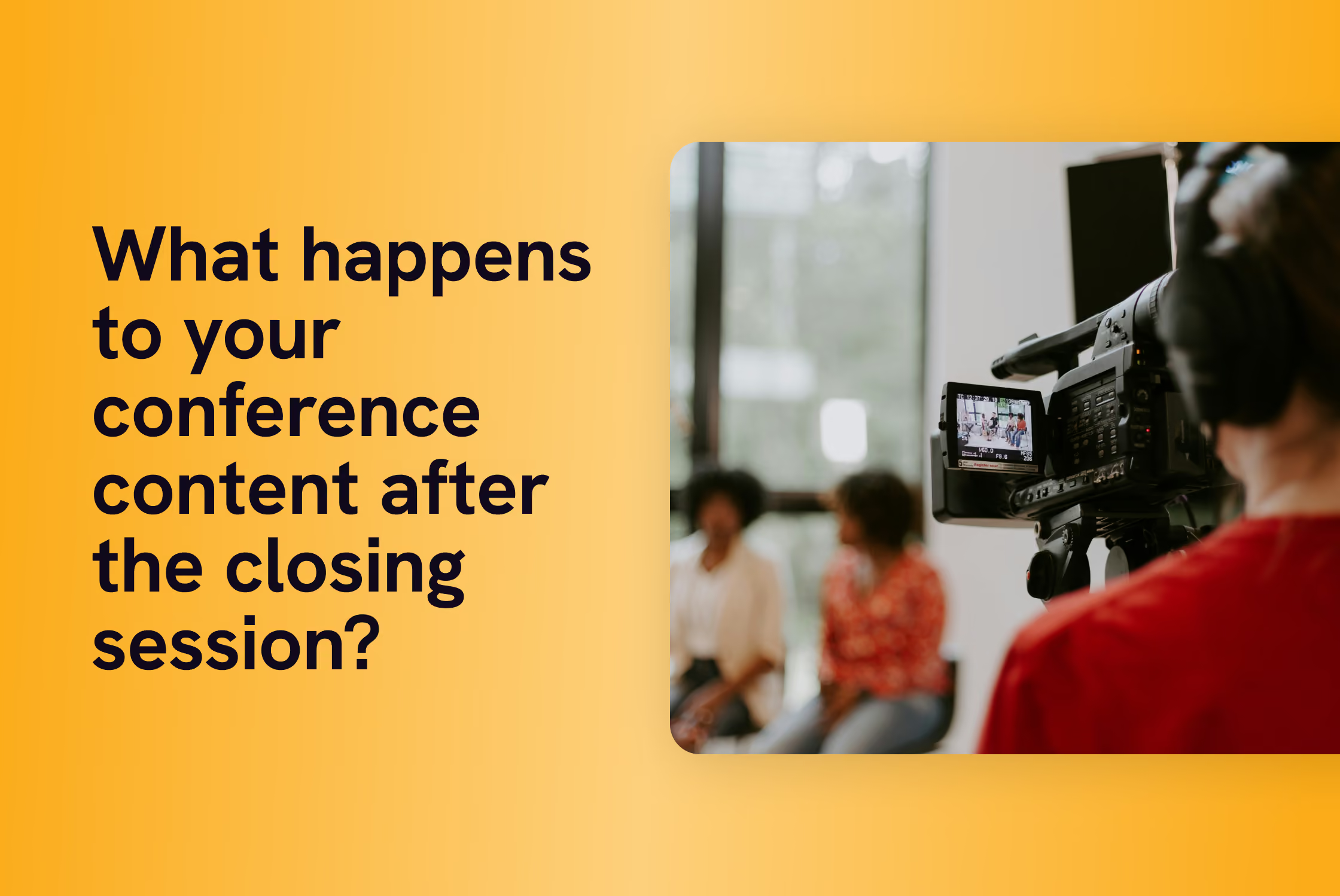
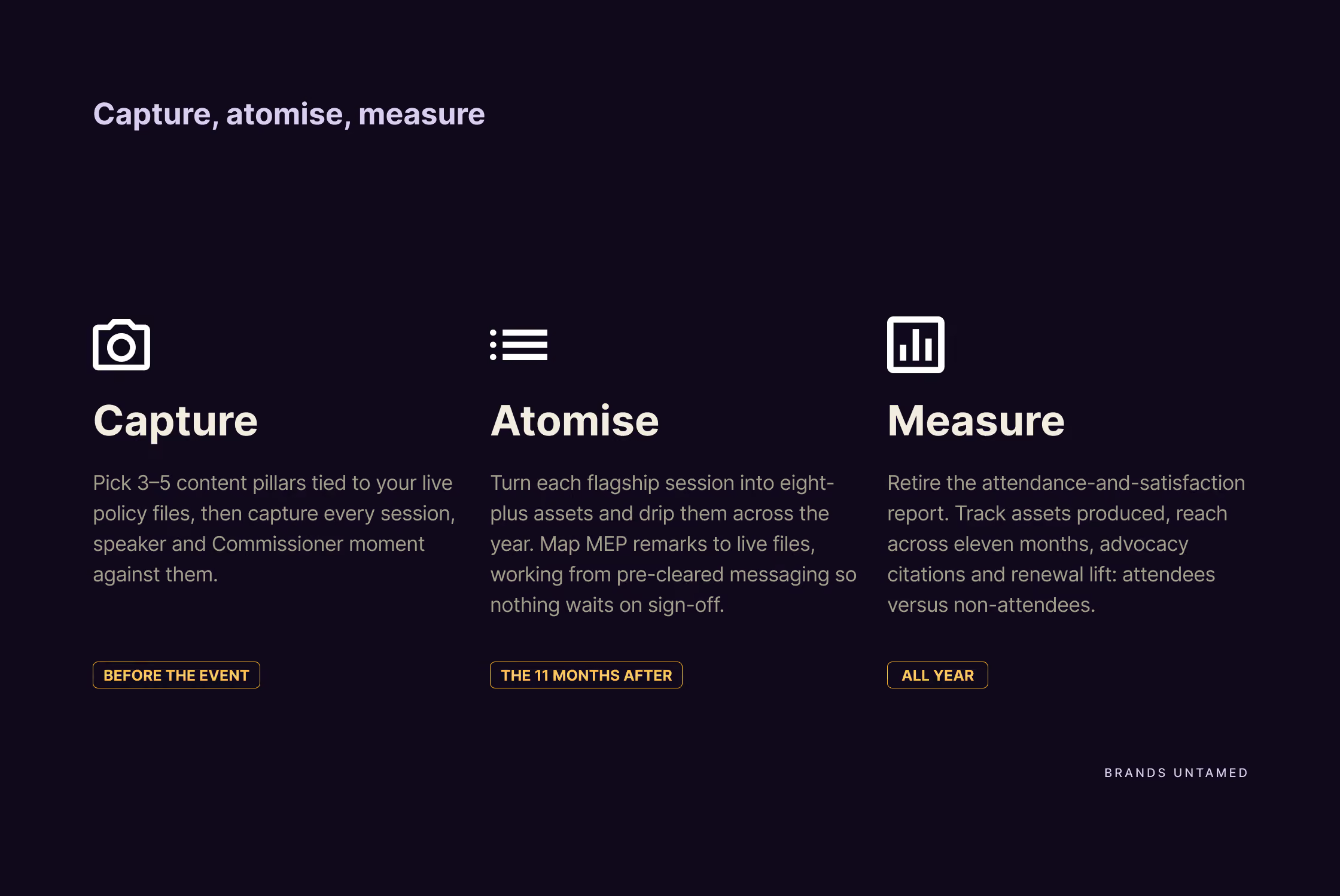
First, decide the content before the event and capture it properly. Pick three to five content pillars tied to your live policy and advocacy priorities, then plan which sessions, speakers and MEP or Commissioner moments feed each one. Whoever captures the event should be briefed against those pillars, not just asked to take nice photos. Record the sessions, get the speaker interviews, shoot stills that actually work as quote cards, clear the rights and consent up front, and design the room like a film set, because the good version of this is one. Getting this right is cheap. Getting it wrong is expensive, because you cannot reshoot a conference.
Second, atomise and drip across the next months. Set a 1:8 target, or higher, on every flagship session, and build an editorial calendar that releases the material across the year so it lands as fresh rather than dumped. Run a dedicated advocacy track alongside it: turn MEP and Commissioner remarks, plus panel positions, into briefing notes, op-eds and posts tied to the files that are actually live. This is sustained editorial production on top of a comms person’s full-time job. Which is exactly why it usually does not happen.
Third, pre-clear the messaging and measure what matters. The reason sign-off strangles everything is that every post starts the approval process from zero. Agree three to five positions before the event, with a messaging narrative the association is comfortable saying out loud, so individual posts do not each need full Board sign-off.
This is a hill I will die on: your LinkedIn posts do not need individual approval if a trusted comms person is working from Board-approved messaging. You are not removing oversight. You are front-loading it. That is the fastest way to break the bottleneck.
Then stop using the attendance-and-satisfaction report as the main measure. Replace it with a year-round scorecard: assets produced from the event, reach and engagement across the following eleven months, advocacy citations, and renewal lift among attendees versus non-attendees. If your feed goes dark for more than two weeks between events, you have a content-supply problem your conference can already solve.
None of this needs a bigger department. It needs someone whose job is the eleven months after, not the three days during. On a lean secretariat, that person usually does not exist, which is the honest reason this is the kind of thing associations bring us in for, rather than asking an already-stretched comms lead to become a production studio overnight.
FAQ
How long does it take to turn a conference into a year of content?
Short answer: You don’t need months. With the right capture plan and pre-approved messaging, you can start atomising within a week and have a first batch of assets live in 2–3 weeks. Most associations get a full 12-month editorial calendar from one event in under a month.
Can a lean comms team actually do this?
Yes, but not alone. The key is not more staff; it’s clearer ownership and front-loaded sign-off. If you pre-define pillars, capture against them, and pre-clear messaging, a single comms person can drip content across the year without becoming a production studio.
How long does social media engagement from a conference actually last?
Not long at all. A LinkedIn post can fade within about 23 hours on average, and an X post even faster. Even if LinkedIn gives a strong post a second life for two or three weeks, that is still tiny compared with eleven months of silence.
Why do trade associations struggle to stay visible between annual events?
Three structural reasons. Comms teams are lean, sign-off is slow, and nobody owns the content after the closing session. The result is posting that happens, but without a coherent year-round narrative.
What is content atomisation and how does it apply to a conference?
Content atomisation is turning one large asset into many smaller ones. Applied to a conference, a single sixty-minute panel becomes clips, quote cards, a written piece, newsletter content, follow-up posts and a carousel.
How should an association measure conference ROI beyond attendance?
Use a year-round scorecard: number of content assets produced from the event, reach and engagement over the following eleven months, advocacy citations tied to live policy files, and renewal lift among attendees versus non-attendees.
Does going quiet between events actually lose members?
Yes. Disengagement is the most common reason members do not renew, ahead of price. A member who attends the annual event, then hears nothing for a year, is exactly the kind of member who quietly drifts away.
When should we start planning what to do with the content?
When you start planning the event, not after it. The biggest mistake is leaving content strategy until the conference is over, by which point the team is exhausted and you cannot reshoot anything you did not capture.
What it comes down to
Members judge you on the gap. They see one polished event a year and a silent feed the rest of it, and they draw the obvious conclusion about how much is actually going on. That signal is the whole subject of what your social media presence says about your association, and a feed that goes dark for eleven months says plenty. You know your association is busier than that. They don't, because you stopped telling them in week two.
The frustrating part is that you've already done the hard bit. The six months, the speaker wrangling, the sign-off, the budget defence. All done. What's left is the easy, fun bit, and it's the bit that gets dropped: using what the event produced instead of letting it sit in a drive.
So if your last conference is doing nothing in a shared folder, and your feed has been quiet since, have the conversation before you start planning the next one. That's the work we do. Talk to us before your next annual conference.