What Your Social Media Presence Says About Your Association (That Your Board Didn't Approve)


Somewhere in a board meeting eighteen months ago, your association signed off on a strategy document. It probably mentioned values, pillars, maybe a tagline. It was thorough. It was approved.
And it has almost nothing to do with what your members actually see when they open LinkedIn on a Tuesday morning.
Every association has a social voice, but the problem is that almost none of them chose it consciously. It got built one rushed post at a time by people with no clear creative direction and a calendar to fill, and on LinkedIn and Instagram it's probably not doing you any favours.
The reflex is to fix it with a refresh: new templates, new colours, a tone-of-voice document. That gives you consistency, which is not the same as a voice. Someone still has to decide what your association sounds like when it's being itself. What follows in this article is what the accidental voice is costing you on LinkedIn and Instagram, and how to take it back.
LinkedIn: where stakeholders decide if you're serious
In the Brussels bubble, LinkedIn is where a Commission official, a journalist, or a prospective member forms their first impression of you before any meeting. So whether your LinkedIn posts read like a copy-pasted memo matters more than you'd think.
The tell is the subject of every post.
- "Our Secretary General spoke at..."
- "We were proud to attend..."
- "Great to see our members at…"
Every sentence starts with YOU.
But none of them says anything to a sector outsider they would stop scrolling for. You're using the most influential professional platform in your ecosystem to talk about yourself, in the third person, about events that already happened.
The associations that shine on LinkedIn do the exact opposite.
They post a position, not a recap.
They say the thing their members are too cautious to say out loud, back it with the data only they have, and let people argue in the comments.
That reads as authority. "We attended a roundtable" is not that.
Instagram: the platform most associations write off too soon
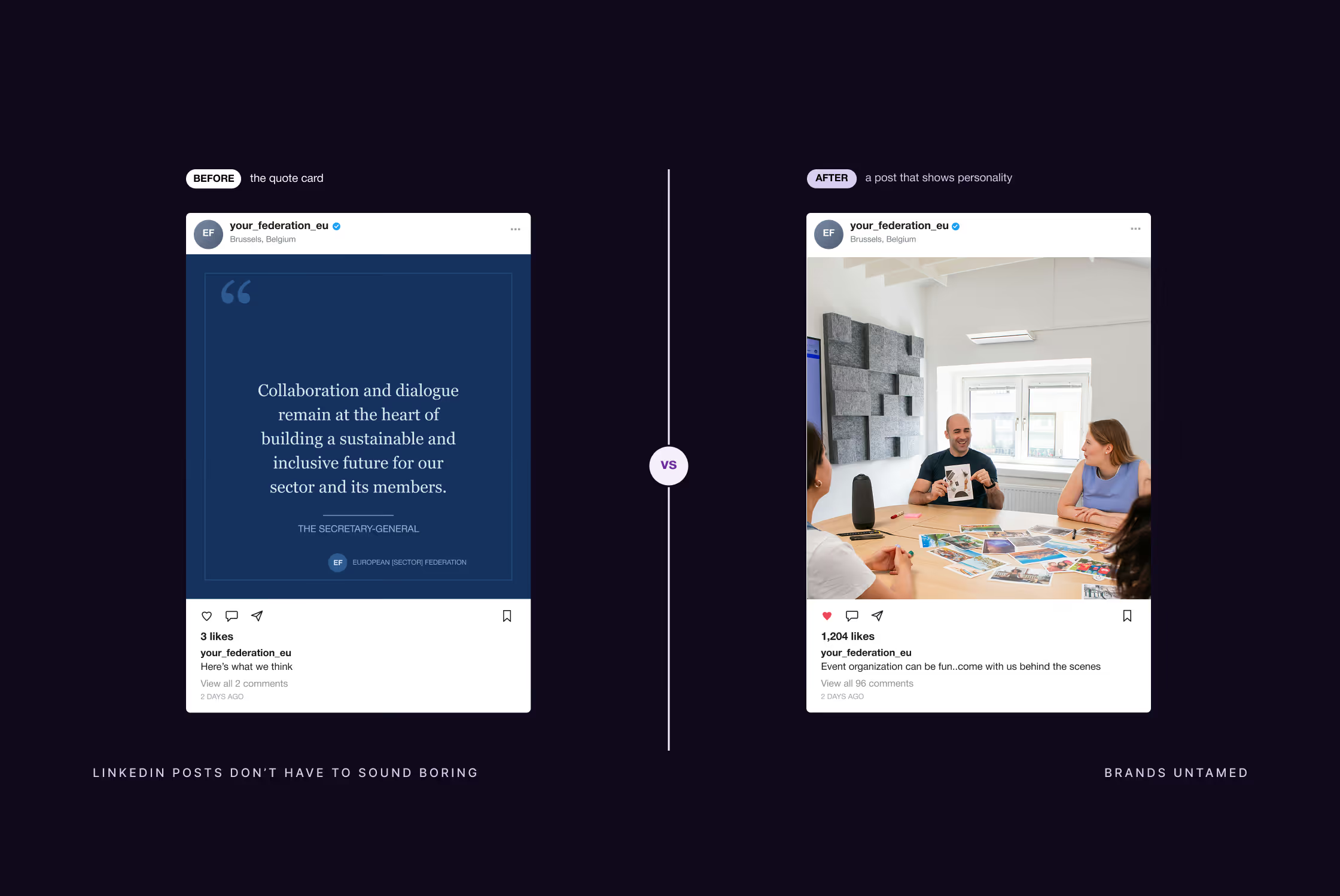
Most associations open an Instagram account, post the same quote cards they put on LinkedIn, get 20 views, and decide Instagram doesn't work for them.
Instagram works fine. The content was just not good enough.
Here’s what I mean by that: not that your expertise is not enough, but the way you frame it or the format you used was not exciting enough for the Instagram audience.
Instagram is a face platform and a behind-the-scenes platform.
It rewards the human stuff that institutional comms is trained to strip out: the team setting up the venue at 7am, the thirty-second clip of your policy lead explaining one thing like they would to a 10 year old, the member who flew in from Lisbon to try Belgian chocolate.
See the difference?
An association sitting on a roster of genuine experts and a calendar of real events has more native Instagram material than most consumer brands, and posts none of it because the quote-card reflex won. The feed ends up as a graveyard of dense graphics nobody screenshots, and you never show the human evidence that you're a living network.
We covered the one change that turns most association Instagram feeds around in a separate piece.
Nobody builds an incoherent feed on purpose
It happens through a hundred small, rushed decisions, each one made by someone with no time and no creative direction:
- The membership officer posted a congratulations graphic she made in ten minutes because the event was tomorrow and the copy hadn’t been approved in time.
- The policy lead shared a dense quote card because the working group asked him to.
- An intern covered June and wrote in a quirkier register than anyone else.
- The events person used a template from a conference platform that had nothing to do with your visual identity.
Each of these is defensible on its own. But look at them stacked together over a year, they're a feed that looks like six different organisations sharing one login.
For an association this is worse than it would be for a B2B company. Your entire proposition is that you represent a sector with one credible, coordinated voice. When your social presence looks scattered, you're contradicting the thing you exist to prove.
It's the same pattern behind why association communication so often fails, and it's rarely the newsletter.
Why "just be more consistent" misses the point
This is a hill I will die on: everyone’s fix is to say they need a brand refresh. New template pack, new colour codes, a tone-of-voice one-pager, and everyone agrees to follow it.
Three weeks later it's back to the June intern's register, because consistency rules don't survive contact with a real content calendar and no creative direction behind them.
Consistency is not the same as having a voice.
You can be perfectly consistent and perfectly forgettable at the same time: the same tidy quote card, the same approved blue, the same "we're pleased to," forever.
That's not a brand, that's a tombstone. The associations whose social presence actually does something take positions. They sound like a specific group of people who know their sector cold, not like a press office reading from a template. They show a little personality. An association of energy regulators and an association of paediatric nurses should not sound interchangeable, and yet on social they often do, because both defaulted to the same safe institutional language.
That has nothing to do with your templates or your brand identity. Somebody has to first decide what the association sounds like when it's being itself, which conversations it enters, and what it never posts, then hold that line across every stretched person publishing under deadline.
Most associations don't have that person in-house.
The comms team are skilled, underwater, and creative direction is the first thing to get dropped. So the accidental brand fills the vacuum.

Taking it back
Read your own last twenty posts on each platform as a stranger would. Not "did we post enough", but "what would I assume about these people if this was all I knew?" For most associations the honest answer is competent, busy, slightly faceless, and smaller than they really are. Good news: it's fixable.
FAQ
Will a brand refresh fix an inconsistent social media presence?
Rarely on its own. New templates, colours, and a tone-of-voice document give you consistency, but consistency is not a voice. Without someone deciding what the association actually sounds like and holding that line, the feed drifts back to whoever is posting under deadline.
Why does my association's Instagram get so few views?
Usually because the content is repurposed LinkedIn quote cards. Instagram rewards faces and behind-the-scenes material: your policy lead explaining one thing simply, the team setting up an event, a member who travelled in. Most associations sit on far more of this than they post.
Who should own an association's social media voice?
One person, or one small group, with the authority to decide what you sound like, which conversations you enter, and what you never post. It does not need to be a full-time hire. It does need to be a clear, senior call, not a setting everyone interprets their own way.
What's the difference between consistency and a voice on social media?
Consistency is using the same colours, fonts, and phrasing every time. A voice is sounding like a specific group of people who know their sector. You can be perfectly consistent and still forgettable. A voice is what makes a stakeholder stop scrolling.
How do I tell whether our feed has a voice at all?
Read your last twenty posts on each platform as a stranger would, ignoring whether you posted often enough. Ask what you'd assume about the organisation if those posts were all you knew. If the answer is "competent and a bit faceless," the voice hasn't been decided yet.
Want to know what your association is saying on social media?
Send us your LinkedIn page or your Instagram grid. We'll tell you, straight, what they're currently signalling to members and stakeholders, and what a sharper version looks like. A senior read on whether your social presence matches the organisation behind it. Get in touch.