


Most of our clients don’t ask what content marketing is.
They already know the definition. They know it’s about creating valuable, relevant content to attract the right audience and build trust over time.
Knowing what it is and what it’s supposed to do is usually not the issue.
The issue shows up later, when content needs to be produced consistently.
When multiple teams get involved.
When everyone agrees that “we should do content marketing”, but no one quite agrees on what the content is supposed to actually do.
Then the cracks start to show.
You end up with blogs, social posts, newsletters, maybe a video series. Activity everywhere. Direction nowhere. And after a while, someone starts asking why all of this effort doesn’t seem to move much.
With this article I’m not aiming to explain content marketing from scratch. I would like to look at why it so often breaks down in practice, even when people know the theory. And how to fix it.
So what is content marketing, really?
At its core, content marketing is pretty simple: you create content that’s genuinely useful to a specific audience. Not to interrupt them, but to help them. Over time, that builds familiarity, trust, and credibility. And eventually, that trust turns into business.
That part’s not new.
What often gets lost is that content marketing is not a list of formats or channels. Blogs, social posts, videos, newsletters,... those are outputs. They’re not the strategy.
Content marketing is a long-term decision about:
- who you want to be useful to
- what you want to be known for
- and what kind of relationship you want to build with your audience
Why it often doesn’t work in practice
In theory, content marketing sounds almost easy.
Create good content. Publish it consistently. Build trust.
But in reality, most teams struggle long before they get there.
Not because they don’t care or lack ideas.
But because content marketing becomes everyone’s responsibility and no one’s job.
One person wants content to support sales.
Another wants visibility and reach.
Someone else wants thought leadership.
And someone is worried about saying the wrong thing.
So everything gets included.
Topics pile up, messages get toned down. Content becomes “careful” instead of clear. And instead of helping the audience make sense of something, the content tries to please everyone internally.
More posts don’t fix that.
New formats neither.
And another platform definitely doesn’t.
What helps more is making fewer (but clearer) decisions about what the content is actually for, and what it’s not.
Content marketing as a system, not a stream
One of the biggest differences we see in mature content marketing teams is how they think about output.
Less as a stream, more as a system.
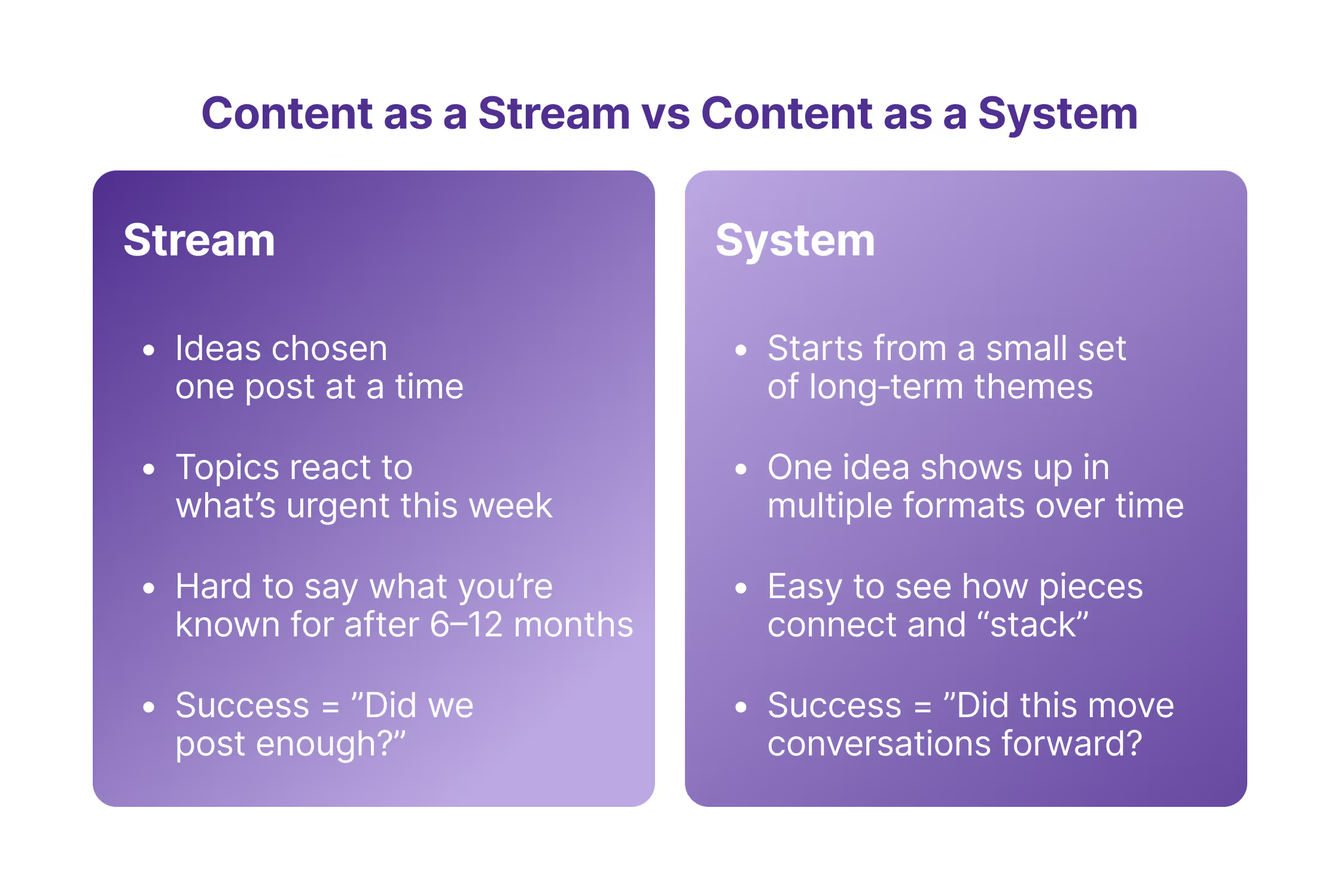
A stream is when content is planned one item at a time.
A blog post because “we should write something”.
A LinkedIn post because it’s been quiet.
A newsletter because it’s been a while.
Each item makes sense on its own, but there’s very little holding it together.
After six months of publishing, it becomes surprisingly hard to answer a simple question: what are you actually known for?
A system starts from the opposite direction.
It begins with a small set of themes that matter long term. Questions you’re comfortable answering more than once. Topics you expect to come back to, in slightly different forms.
From there, content starts to stack.
One idea can show up as a long article, then as a short post, then as a slide in a presentation. Not to recycle for the sake of it, but because the idea itself is worth returning to.
That way, content starts working harder than the effort that went into producing it.
How experienced teams approach content
The biggest difference between teams that struggle with content marketing and teams that don’t usually isn’t talent or creativity, but decision-making.
Sometimes content is being kept open for as long as possible. Everyone gets a say. Every concern gets added “just to be safe”.
More mature teams are clearer on ownership. Someone decides what the content is for, and that decision holds. It might be worth disappointing some internal expectations if that means being clearer for the audience.
This results in publishing with more intent.
You also see a different attitude towards reuse.
Instead of constantly chasing something new, they expect content to travel. Across channels, formats, and time.
And maybe most importantly, they judge success differently.
Not just by views or likes, but by whether the content helps conversations (with prospects, partners, internally) move forward.
That’s a very different mindset from “we need to post something”.
A note on B2B and B2C
Content marketing works in both B2B and B2C, but it’s used differently.
In B2C, content competes for attention in crowded, fast-moving environments. Emotional resonance, timing, and recognisability play a big role.
In B2B, content moves slower.
It gets forwarded, bookmarked or reopened weeks later when someone needs to explain something internally.
That changes what “good” looks like.
In B2B, clear thinking matters more than clever hooks.
Consistency beats novelty.
And usefulness matters more than reach.
A lot of B2B frustration comes from trying to force B2C dynamics onto situations that are fundamentally different.
A calmer way to think about content marketing
I’m a big believer in asking (the right) questions.
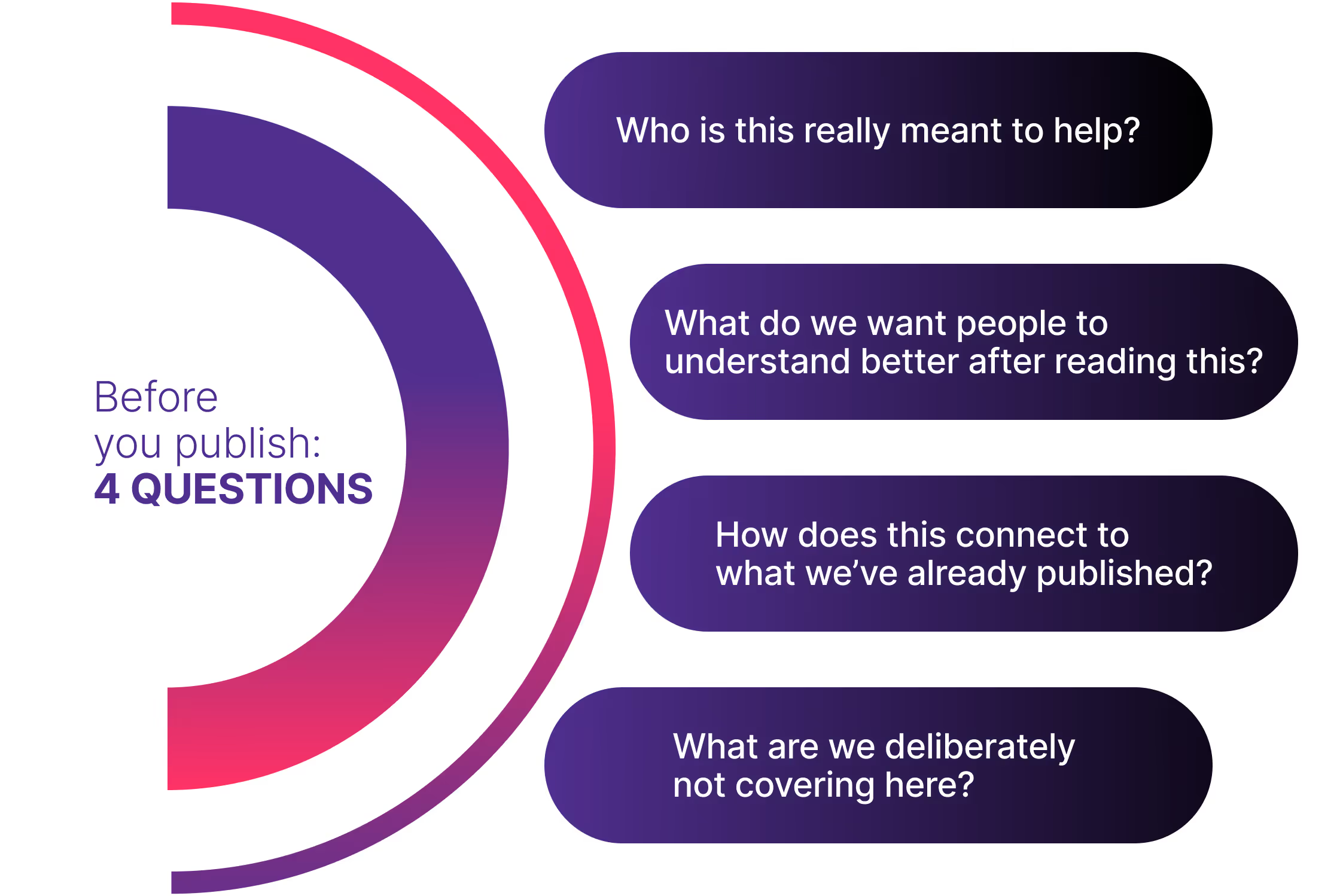
Before adding another article, post, or channel, it’s often worth asking:
- Who is this really meant to help?
- What do we want people to understand better after reading this?
- How does this connect to what we’ve already published?
- What are we deliberately not covering?
Those questions help in making the work coherent. And coherence is what separates content that “fills space” from content that actually earns attention.