

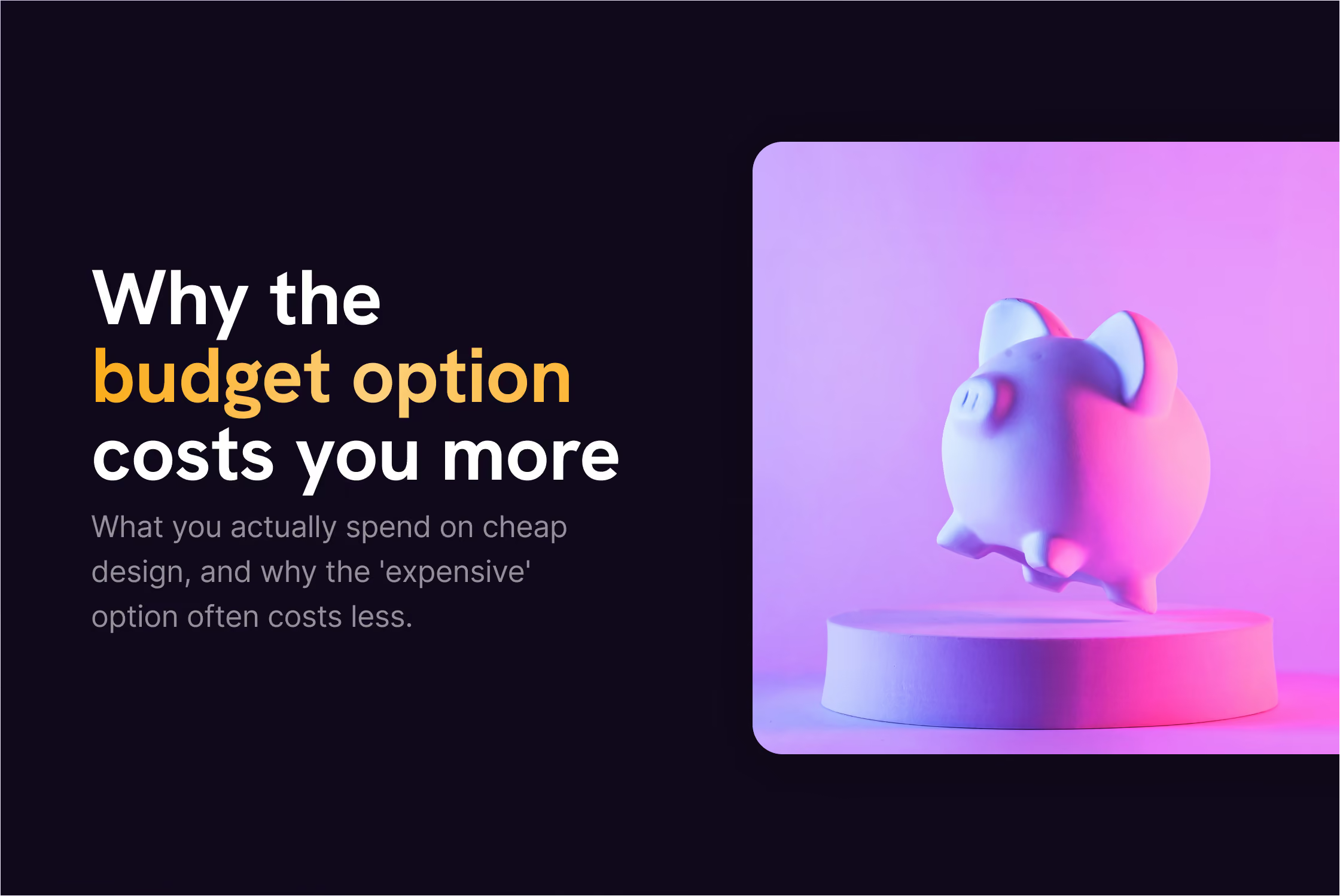
If you've ever hired a cheap designer and ended up spending more time, money, and energy than you planned, you're not alone. Many people who go the budget route end up paying for the same project twice: once for the version that didn't quite work, and again for the version they actually needed.
Cheap design doesn’t always save money. It can move the cost somewhere else: into revision cycles, into your team's time, into inconsistent brand perception, and eventually into a second project to get it right.
This article is our attempt to make those costs visible before they happen, and to share a few things we've learned about what it actually means to “spend well” on design.
Everyone is a designer now. And that's the problem.
Design has never been more accessible. Canva gives you templates for everything. AI tools can generate a logo, a social post, or a full slide deck in seconds. Your intern can probably put together something that looks... fine.
And for some situations, fine is enough. Internal presentations. A placeholder while you figure out your brand. Nobody's arguing that every single piece of design needs a dedicated creative team behind it.
But something has changed. Because the bar for "having something" has dropped to zero, the bar for "standing out" has gone up. When everyone can produce a decent-looking document or website, looking decent stops setting you apart. It means you blend in.
The value of design has moved. Making things look nice is something that plenty of tools can handle now. What they can't handle is making things work strategically: the right message, to the right audience, with the right visual language, applied consistently across every touchpoint. That's the part that templates and AI don't solve. And that's the part that cheap design almost always skips.
Where the real cost shows up
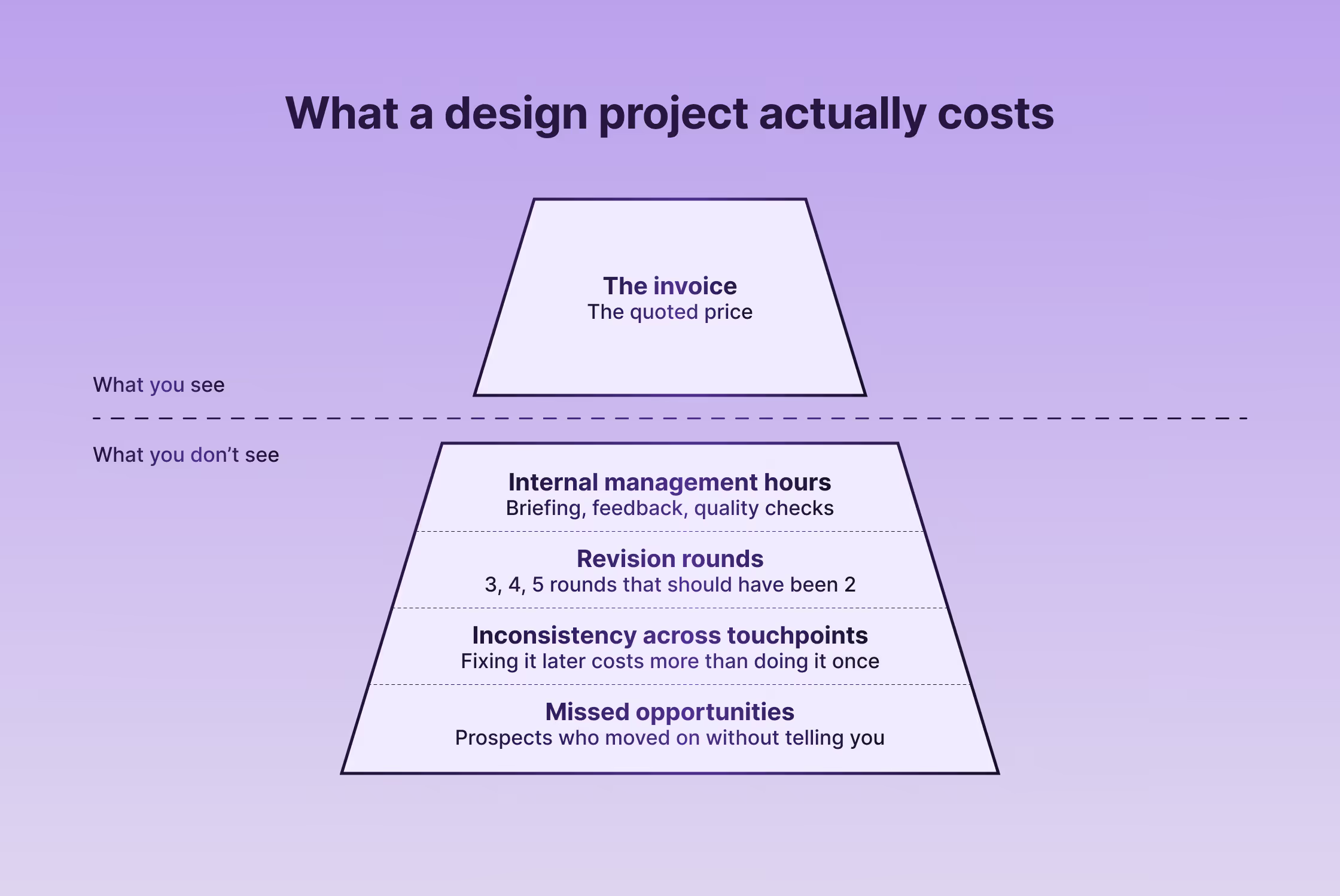
When we talk about the cost of a design project, most people think about the invoice. But that’s only one part. What's harder to see is everything else that happens around it.
The revision spiral. A less experienced designer or a budget platform often means limited process and limited strategic thinking upfront. The result: the first draft misses the mark. You give feedback. The second version is closer but still off. Three, four, five rounds later, you've spent weeks on something that should have taken days.
The creative director you didn't hire (but became anyway). This is one of the costs that nobody tracks. When you work with a cheap partner, someone on your team inevitably becomes the quality controller. They check fonts, fix alignment, ensure the right logo version was used, rewrite the copy that was laid out wrong. They're doing creative direction without the title, the training, or the time for it. And none of that effort shows up on any invoice.
Inconsistency that compounds over time. When different cheap freelancers handle different projects over time, the results start to diverge. The annual report doesn't match the website. The event branding doesn't match the social media. The pitch deck looks like it was made by a different organisation entirely. Each piece might look acceptable enough on its own, but together they don't tell a coherent story. Fixing that later (retroactively aligning everything into one visual system) is a much bigger project than building it properly from the start.
The credibility you lose without realising it. A prospect who sees template-driven design on your website forms an opinion before reading a single word. A member who receives a quickly assembled report takes the content less seriously. A potential client who compares your presence to a competitor simply moves on. You'll never get an email explaining why someone didn't reach out. But over months and years, those missed conversations add up.
What to look for in a creative partner
The difference between a design partner who saves you money in the long run and one who costs you more than the invoice suggests, usually comes down to one thing: what happens before the design starts.
A partner who jumps straight into production will give you exactly what you asked for. A partner who starts by asking questions might challenge what you asked for, and that challenge is often the real value.
Questions like: why does this project exist? What happened with the last version? Who is the actual audience, and what do they need to understand or feel? Is the deliverable you've asked for actually the right solution, or could there be a better approach?
We've worked with clients who came to us asking for a new annual report design. The easy move would have been to take the content and lay it out. But when we asked why the previous reports weren't getting read, the answer had nothing to do with the visual design. The problem was that the report tried to cover everything for everyone, so nobody found the part that was relevant to them. A restructured format with clear sections for different reader groups turned it into something members actually engaged with.
That's the kind of outcome that a template or a quick production job won't deliver. And it's worth thinking about what kind of partner you need, before you start comparing quotes.
A simple way to compare the total cost
Before you sign off on any creative project, try estimating the total cost rather than just looking at the invoice.
Start with the quote. Then add your team's estimated time for managing the project: briefing, feedback rounds, reviews, file-checking. Be honest about how many hours a less experienced partner will require from your side versus someone who can work more independently. Then consider the probability that you'll need a second round, either extended revisions or a full do-over. Multiply that probability by the estimated cost of round two.
What you'll often find is that the "expensive" quote with a two-round process and minimal management time comes out cheaper than the "affordable" one with five revision rounds, 20 hours of internal oversight, and a real chance of needing to start over. The cheapest quote and the lowest total cost are very often not the same thing.
Build a system, not a stack of one-off projects
One more thing worth mentioning. There's a meaningful difference between buying individual design projects and building a brand system.
One of our clients used to brief a separate project every time they needed something designed: social media templates one month, a presentation the next, event materials after that. Each one cost somewhere between €800 and €2,000, each required a full briefing cycle, and because different freelancers handled different projects, each one looked slightly different. When they invested in a proper brand system with guidelines, templates, and a structured asset library, their cost for routine design work dropped significantly. The quality became consistent too, because the system itself kept things coherent without anyone needing to oversee every detail.
The upfront investment was higher than any single project they'd commissioned before. But within a few months, it had paid for itself in reduced briefing time, fewer revisions, and a brand that finally felt like one organisation.
Spending well vs. spending more
I’m not writing this to argue that design should be expensive. Not everything needs a big investment, and there's nothing wrong with using lighter resources for internal work or early-stage materials.
But the projects that shape how people perceive your organisation deserve the time and thinking to get them right the first time. Your annual report, your brand identity, your pitch deck for major clients, the first impression your website makes. Because the cost of getting those wrong doesn't show up on any invoice. It shows up in trust, in credibility, and in conversations that never happen.
The question worth asking before any design investment is: "how do we make sure we only have to do this once?" instead of "how do we keep this cheap?" The answer usually comes down to a better brief, a clearer strategy, and a partner who's been through the process enough times to get it right from the start.