

“I’m not sure this is for me.”
We hear that a lot when we bring up personal branding.
Usually from a Secretary General, a Policy Director, or a Head of Communications. The sentence comes with a polite smile. Sometimes followed by: “We’re not in the business of self-promotion.”
And they’re right.
Associations are not lifestyle brands. They represent sectors, industries, and public interests. Their legitimacy depends on substance, not noise.
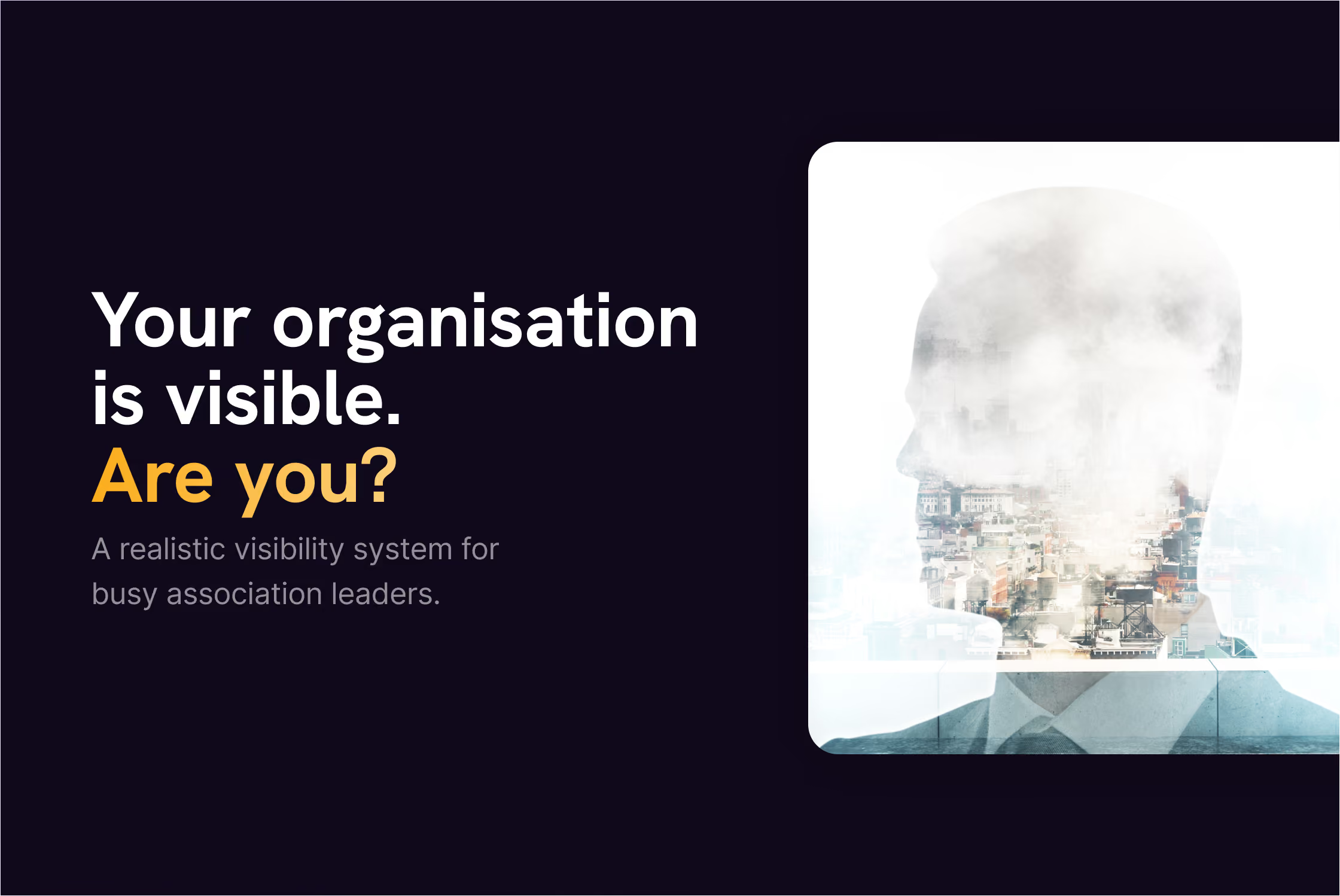
Which is exactly why leadership visibility deserves attention.
What personal branding means in serious industries
Strip away the internet version of the term and what remains is simple:
Personal branding is the deliberate shaping of how your professional expertise is perceived.
Not exaggerating it or polishing it beyond recognition, just making sure it’s visible and consistent.
In the past, that reputation was built almost entirely in meetings, conferences, boardrooms and phone calls.
Today, part of it is built online, whether you actively manage it or not.
Try something simple. Search your own name on Google.
What shows up?
For many association leaders, the result looks like this:
- A LinkedIn profile that hasn’t been updated in months, sometimes years
- A default banner
- A headline that lists a title, but not a perspective
- An empty Featured section
- A handful of reshared posts
None of that’s wrong. But it leaves questions unanswered.
In EU policy environments, a search and a LinkedIn scan are now as standard as reading a briefing note. That first impression often forms before a meeting ever begins.

The shift associations cannot ignore
Associations often invest significant time and budget into their corporate presence. The website is carefully structured. The annual report is designed. The corporate LinkedIn page is managed.
But the individuals leading those organisations are often invisible online.
That gap matters more than it used to.
Stakeholders search names before meetings.
Journalists look up profiles before quoting someone.
Members follow leaders to understand direction and tone.
Policymakers engage with individuals, not logos.
A Secretary General once told us: “I assumed our corporate page was enough.”
It wasn’t a strategic decision or anything, it was simply never reconsidered.
We see that pattern repeatedly: strong organisations, thoughtful leadership and minimal intentional visibility at the individual level.
From profile to positioning
Most association leaders already have a LinkedIn profile. However, very few use it intentionally.
There’s a big difference between having a digital business card and having a defined professional narrative.
Posting (or reposting) occasionally is not the same as positioning.
Positioning starts with focus:
- What topics are you consistently associated with?
- What perspective do you bring?
- When someone hears your name, what should come to mind?
For most leaders we work with, three to four clearly defined topic pillars are enough. These connect directly to their role, the organisation’s strategy and the wider policy landscape.
At this point, many leaders say:
“I don’t have time to become a content creator.”
When structured properly, this often takes no more than 30 minutes a week. It doesn’t require daily posting, or oversharing personal stories.
Within those three to four pillars, visibility can look like:
- Sharing perspective after a major policy development
- Reflecting on insights from a conference or board meeting
- Clarifying complex issues for members in accessible language
- Highlighting milestones and strategic progress
Consistency within defined themes matters far more than volume.
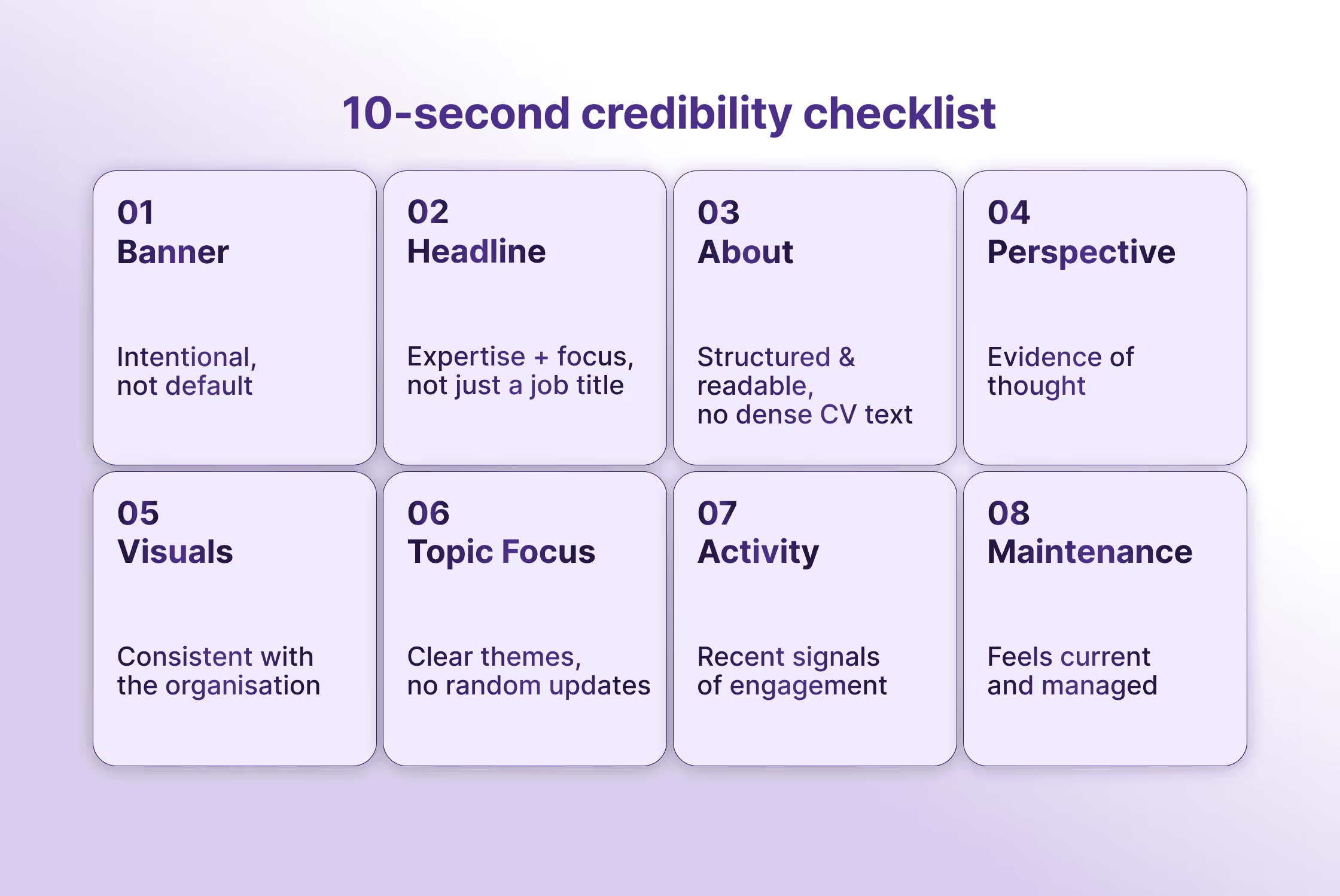
The 10-second credibility scan
When someone lands on a LinkedIn profile, they form an impression quickly.
Here’s the checklist most visitors run through:
- Is the banner intentional or default?
- Does the headline clarify expertise, or just state a role?
- Is the About section structured and readable?
- Is there evidence of thought or perspective?
- Is the visual tone aligned with the organisation?
- Is there consistency in topics?
- Is there any signal of activity?
- Does this profile feel maintained?
None of these require daily posting, but they do require attention.
In one case, we worked with a Policy Director whose organisation had a highly polished corporate presence. His profile, however, had not been touched in four years.
We clarified his headline, restructured his About section, defined three topic pillars and designed a banner aligned with the organisation’s visual identity.
Nothing about his expertise changed.
But the way people responded to him did. Within three months, invitations to speak and media requests started coming to him directly rather than through the generic press inbox.
For communications teams: visibility without chaos
For Heads of Communications, the hesitation often centres around governance.
- What if messaging drifts?
- What if the tone is inconsistent?
- Who approves what?
- How do we avoid duplicating the corporate page?
All valid concerns.
The answer is not to avoid leadership visibility, but to define and structure it.
In practice, that usually includes:
- A short positioning document per leader
- Agreed topic pillars
- Clear red lines
- A simple review workflow
- A realistic rhythm, often no more than one post per week
If it’s structured, leadership visibility reinforces the corporate narrative instead of competing with it.
Personal branding beyond LinkedIn
Of course, personal branding doesn’t only live on one platform.
It shows up in panel moderation, conference speaking, interviews, podcasts, opinion pieces and internal communications.
LinkedIn is simply the most accessible public layer of that ecosystem. It’s searchable, centralised and widely used in EU policy circles.
Treating it intentionally ensures coherence across all these touchpoints.
Why this is increasingly part of our work
Over the past years, more association leaders and communications teams have approached us with similar questions:
“How do I make my profile reflect the level at which I operate?”
“How do we align leadership visibility with our strategy?”
“How do we do this without turning into influencers?”
In most cases, the answer is not “more content”.
It’s definition, consistency and structure.
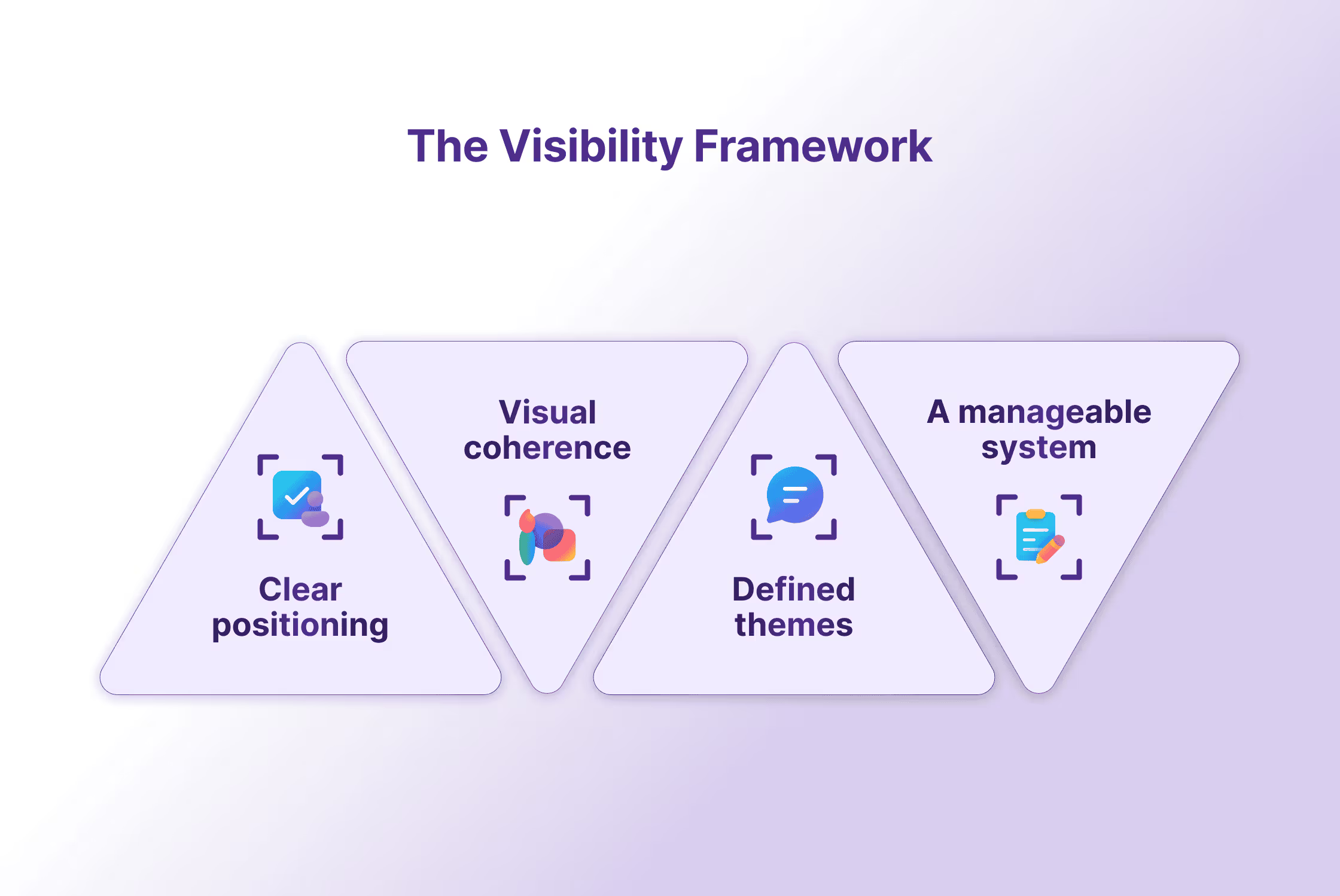
That requires:
- Clear positioning
- Visual coherence
- Defined themes
- A manageable system
From the outside, this may look like personal branding.
In practice, it’s structured reputation management.
The associations that approach leadership visibility this way tend to see stronger engagement and a clearer public perception. The difference is not the number of posts, but the thinking behind them.


.avif)