

Before You Start Your Association’s Rebrand, Read This

July 16, 2026
Written by
Ralu Gijbels
Scroll Down
Before You Start Your Association’s Rebrand, Read This

In July 2014, the National Speakers Association walked on stage at its annual convention in San Diego and unveiled its new name: Platform. 

One word, modern, forward-looking. You’d think this would work. But, within days, their board was in an emergency meeting, and within two weeks the name was dead. 

Members hated it. 

It also happened to collide head-on with a bestselling book of the same name by Michael Hyatt, a well-known figure in exactly that community. 

The association's president called it “a stumble”, which is a generous word for unveiling a rebrand to your members and reversing it before the conference lanyards hit the bin.

None of this had to do with design or the logo. The logo was fine. The typography was fine. What failed was everything else around the deliverable. 

Nobody had tested the name against the community it was supposed to represent, and nobody had prepared members for a change of that size. The work in the middle was competent but the diagnosis and research before it and the rollout after it were completely missing.

That pattern repeats across the association world constantly. Read the post-mortems on rebrands that went wrong and the same two culprits keep showing up: research that never happened, and a rollout nobody planned. 

If you do this in B2B, you get a brand that underperforms. In a membership organisation, however, it produces a revolt.

When should an association rebrand rather than refresh?

Refresh when the foundations are sound and only the visuals are dated. 
Rebrand when the name, positioning or mission no longer match what the organisation actually does.

Simple test on paper, right? We've unpacked the general rebrand-versus-refresh question before. In an association, the test is the same. But what are the symptoms of dated visuals or a mismatch in positioning? 

  • The name still describes the industry you represented fifteen years ago, but the mandate has moved on. 
  • The membership has changed shape and the brand is talking to a room that no longer exists. 
  • New members keep asking what you actually do. 
  • Or the quiet one: your own team avoids the brand. The slides don't match the website, every department runs its own template, and someone keeps a folder of logos they've discreetly “fixed” themselves.

Staff routing around the brand is a message. The board just hasn't said it out loud yet.

A refresh is the right call when people know and respect what you do, but you look smaller, slower or less international than you are. Shorter project, smaller bill, far less politics. A good studio will tell you which one you need instead of selling you the bigger job.
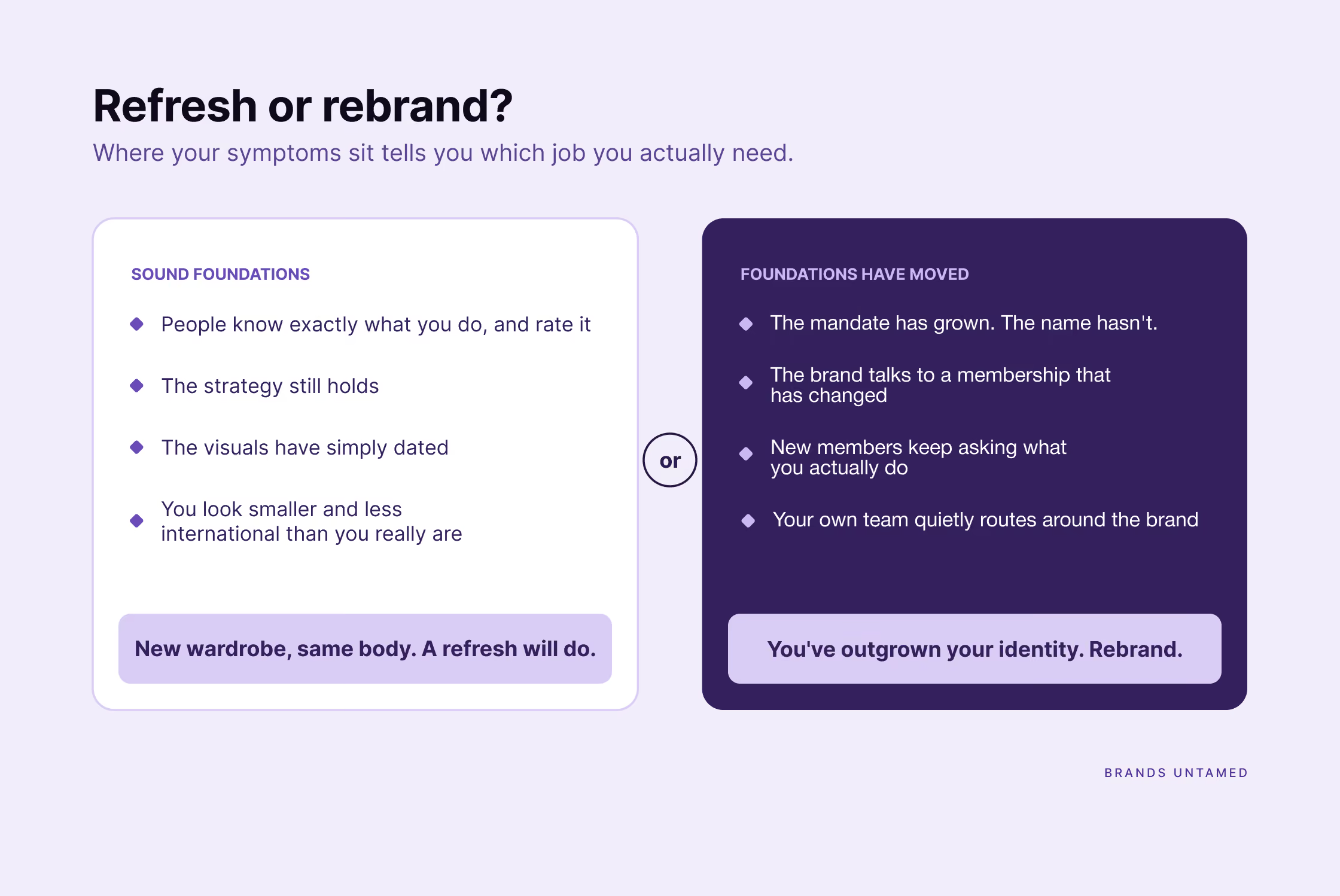
Refresh or rebrand your association, by Brands Untamed

How much does an association rebrand cost?

There is no honest fixed number, because two associations with identical briefs can end up tens of thousands of euros apart. What sets the price is not the logo. It is these specific three things:

  • Scope, first. A refreshed visual system is one job. A complete narrative and visual identity, including a new logo is another.  
  • Research depth, second. How much diagnosis still needs to happen before anyone opens a design tool? This is the phase associations are most tempted to trim to protect the budget, however it is precisely the phase whose absence explains why so many rebrands never pay off. Cutting diagnosis to save money on a rebrand is like skipping the survey to save money on a house.
  • And third, the one nobody prices in until it hurts: governance. Every additional sign-off layer, every working group, every "let's circulate this to the national members first" adds weeks of senior time. In an association, the approval structure is a cost driver in its own right, and any studio quoting you without asking about it is guessing.

So treat any number you find online, usually US-focused, as a very rough number. The useful number comes from a scoping conversation about your specific structure, not from a blog post. Including this one.
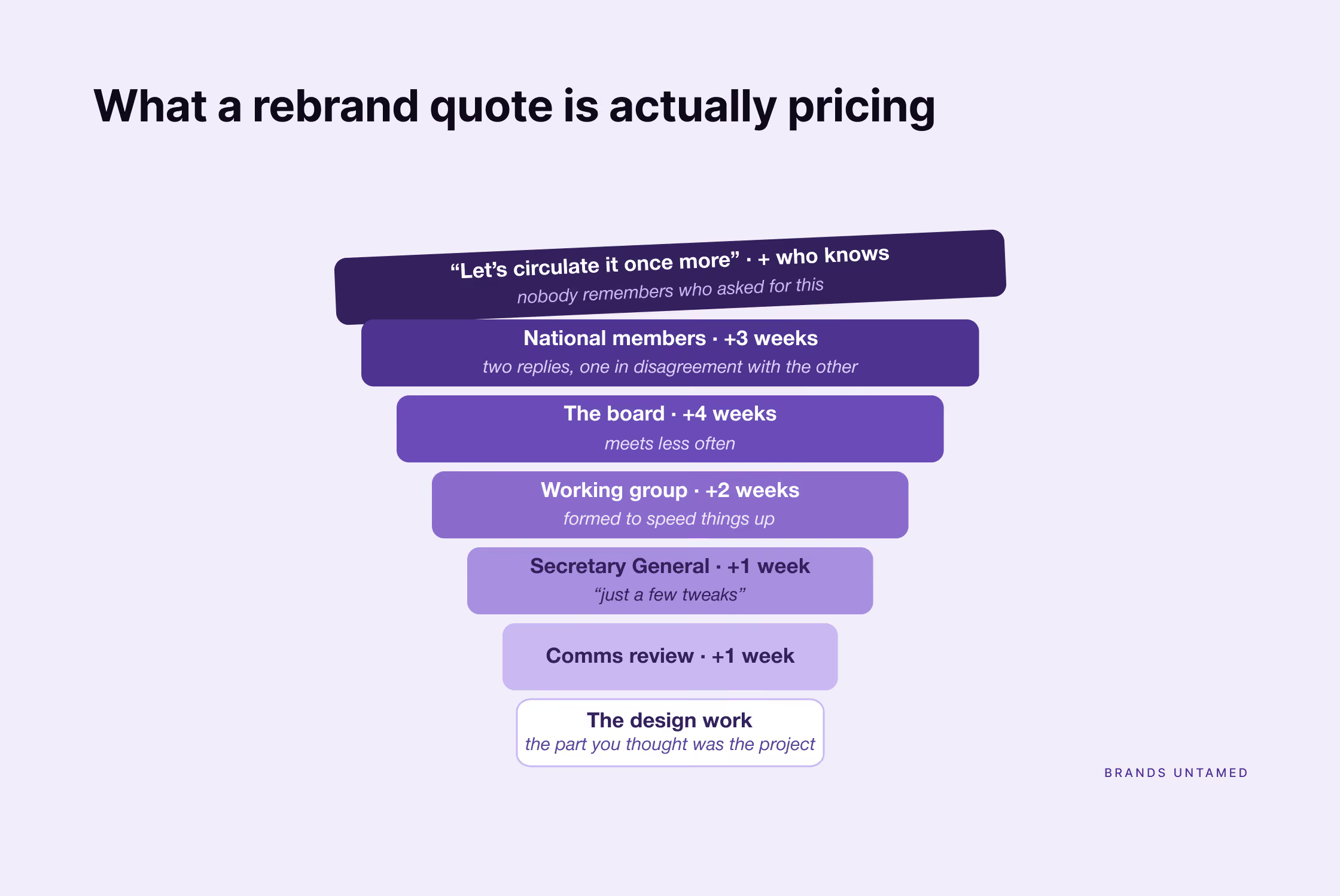
What a rebrand quote is actually pricing, by Brands Untamed

How do you rebrand an association without alienating your members?

Three moves: involve members in the diagnosis, don’t surprise anyone, and approve the complete narrative before anyone sees design.

Start with the diagnosis. 

A rebrand done by the secretariat feels like something imposed to members, and it will not sit well with them. So interview them at the start. The board, a few key member companies, the national associations who'll say what they actually think. You get the real perception problems on the table, and your future critics get their fingerprints on the project. By launch day, the loudest people in the room helped build the thing.

Then, sequencing. The National Speakers Association surprised its members. Look how that went. Before anything goes public, the board has to formally approve the rebrand, member companies have had a preview, and the why has been told in plain terms: what changed in the sector, what the old brand was costing you and what the new one makes possible.

The third move is the one that saves the most pain, and we've watched it work across enough board cycles to call it a rule: get the words signed off before anyone sees a design. Positioning, messaging, the name if there's a new one. All approved in a plain document first. Show a board words and visuals together and they will litigate the colour palette as a proxy for their discomfort with the strategy. Three rounds of design revisions later, you're still solving a problem that was never about design. Words approved first means late objections have no base, and comms teams have solid ground to hold the line.

How long does an association rebrand take?

Plan for six to twelve months, and understand that your own governance calendar sets the pace, not the designers working on it.

A senior studio can move from diagnosis to a finished identity in a couple of months of actual full-time work. 

What stretches the timeline is that an association's decisions happen at board meetings and general assemblies, and those happen when they happen. If your board meets quarterly and your rebrand needs three approval moments, the calendar has just written itself regardless of how fast anyone designs. 

The practical move is to map the project onto your governance rhythm from day one: which board meeting approves the strategy, which one approves the identity, which general assembly or congress becomes the launch moment. A congress launch, incidentally, is usually the strongest option you have. It gives the rebrand a stage, an audience and a deadline, and deadlines are how association projects actually finish.

For associations with very strict governance, there's a version of this that we've seen work very well in practice: a rebranding task force with full ownership, meeting regularly on the project timeline, with the board involved only at specific milestones that were mapped from the start.
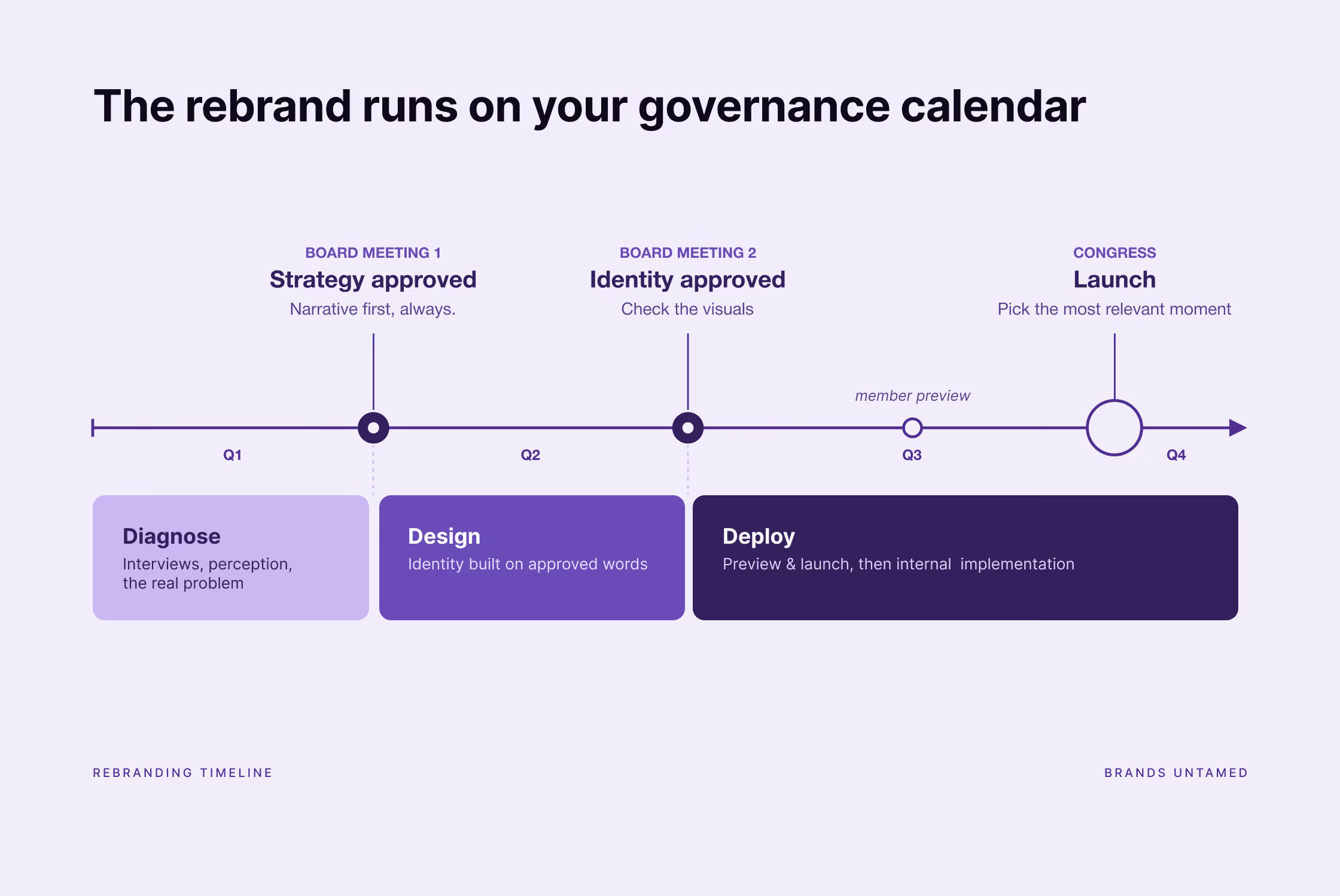
The rebrand runs on your association's governance calendar, by Brands Untamed

FAQ

How long does an association rebrand take? 

Six to twelve months is realistic. The design itself takes a couple of months of full-time work; the rest is your governance calendar. If your board meets quarterly and the project needs three approval moments, the timeline has already written itself.

How does a rebrand actually get implemented? 

In waves, not overnight. The launch moment (ideally a larger event) flips the visible layer: website, social, signage, templates. Then the long tail: reports, member communications, national member materials, everything carrying the old identity. Plan the rollout order before launch day, give teams usable templates rather than a brand book PDF, and accept that the last old-logo document will surface somewhere embarrassing about a year in.

What's the difference between a rebrand and a refresh? 

A refresh updates the visuals while keeping the strategy, name and positioning. A rebrand rebuilds the foundations because they no longer match what the organisation does. The refresh is a shorter, cheaper, far less political project.

Do we need to change our name? 

Only if the name doesn’t explain well enough what you do or blocks who you need to reach. Renaming is the highest-risk, highest-governance part of any rebrand, and plenty of successful association rebrands keep the name and change everything around it.

Should we run the rebrand in-house? 

The research and the politics need an outside voice, because members and board directors say things to a neutral third party that they'll never say to the secretariat. The design needs senior craft across strategy and identity, not someone who's good with Canva. That's two senior specialist roles for a project that happens once a decade; no association's payroll is built for that, and it shouldn't be.

What's the first step if we think we need a rebrand?  

If any of the symptoms above sounded familiar, the useful next step is not a design brief. It is a diagnosis: an honest look at whether the brand still matches the organisation, whether you need a rebrand or a refresh, and what the politics of getting there will look like in your specific structure. That is where we always start, because it is the phase that decides whether your rebrand ends up in someone else's post-mortem. 

If you suspect your association has outgrown its brand, get in touch and we will tell you, candidly, whether you need the full job or just the wardrobe.

Table of Contents

In July 2014, the National Speakers Association walked on stage at its annual convention in San Diego and unveiled its new name: Platform. 

One word, modern, forward-looking. You’d think this would work. But, within days, their board was in an emergency meeting, and within two weeks the name was dead. 

Members hated it. 

It also happened to collide head-on with a bestselling book of the same name by Michael Hyatt, a well-known figure in exactly that community. 

The association's president called it “a stumble”, which is a generous word for unveiling a rebrand to your members and reversing it before the conference lanyards hit the bin.

None of this had to do with design or the logo. The logo was fine. The typography was fine. What failed was everything else around the deliverable. 

Nobody had tested the name against the community it was supposed to represent, and nobody had prepared members for a change of that size. The work in the middle was competent but the diagnosis and research before it and the rollout after it were completely missing.

That pattern repeats across the association world constantly. Read the post-mortems on rebrands that went wrong and the same two culprits keep showing up: research that never happened, and a rollout nobody planned. 

If you do this in B2B, you get a brand that underperforms. In a membership organisation, however, it produces a revolt.

When should an association rebrand rather than refresh?

Refresh when the foundations are sound and only the visuals are dated. 
Rebrand when the name, positioning or mission no longer match what the organisation actually does.

Simple test on paper, right? We've unpacked the general rebrand-versus-refresh question before. In an association, the test is the same. But what are the symptoms of dated visuals or a mismatch in positioning? 

  • The name still describes the industry you represented fifteen years ago, but the mandate has moved on. 
  • The membership has changed shape and the brand is talking to a room that no longer exists. 
  • New members keep asking what you actually do. 
  • Or the quiet one: your own team avoids the brand. The slides don't match the website, every department runs its own template, and someone keeps a folder of logos they've discreetly “fixed” themselves.

Staff routing around the brand is a message. The board just hasn't said it out loud yet.

A refresh is the right call when people know and respect what you do, but you look smaller, slower or less international than you are. Shorter project, smaller bill, far less politics. A good studio will tell you which one you need instead of selling you the bigger job.

Refresh or rebrand your association, by Brands Untamed

How much does an association rebrand cost?

There is no honest fixed number, because two associations with identical briefs can end up tens of thousands of euros apart. What sets the price is not the logo. It is these specific three things:

  • Scope, first. A refreshed visual system is one job. A complete narrative and visual identity, including a new logo is another.  
  • Research depth, second. How much diagnosis still needs to happen before anyone opens a design tool? This is the phase associations are most tempted to trim to protect the budget, however it is precisely the phase whose absence explains why so many rebrands never pay off. Cutting diagnosis to save money on a rebrand is like skipping the survey to save money on a house.
  • And third, the one nobody prices in until it hurts: governance. Every additional sign-off layer, every working group, every "let's circulate this to the national members first" adds weeks of senior time. In an association, the approval structure is a cost driver in its own right, and any studio quoting you without asking about it is guessing.

So treat any number you find online, usually US-focused, as a very rough number. The useful number comes from a scoping conversation about your specific structure, not from a blog post. Including this one.

What a rebrand quote is actually pricing, by Brands Untamed

How do you rebrand an association without alienating your members?

Three moves: involve members in the diagnosis, don’t surprise anyone, and approve the complete narrative before anyone sees design.

Start with the diagnosis. 

A rebrand done by the secretariat feels like something imposed to members, and it will not sit well with them. So interview them at the start. The board, a few key member companies, the national associations who'll say what they actually think. You get the real perception problems on the table, and your future critics get their fingerprints on the project. By launch day, the loudest people in the room helped build the thing.

Then, sequencing. The National Speakers Association surprised its members. Look how that went. Before anything goes public, the board has to formally approve the rebrand, member companies have had a preview, and the why has been told in plain terms: what changed in the sector, what the old brand was costing you and what the new one makes possible.

The third move is the one that saves the most pain, and we've watched it work across enough board cycles to call it a rule: get the words signed off before anyone sees a design. Positioning, messaging, the name if there's a new one. All approved in a plain document first. Show a board words and visuals together and they will litigate the colour palette as a proxy for their discomfort with the strategy. Three rounds of design revisions later, you're still solving a problem that was never about design. Words approved first means late objections have no base, and comms teams have solid ground to hold the line.

How long does an association rebrand take?

Plan for six to twelve months, and understand that your own governance calendar sets the pace, not the designers working on it.

A senior studio can move from diagnosis to a finished identity in a couple of months of actual full-time work. 

What stretches the timeline is that an association's decisions happen at board meetings and general assemblies, and those happen when they happen. If your board meets quarterly and your rebrand needs three approval moments, the calendar has just written itself regardless of how fast anyone designs. 

The practical move is to map the project onto your governance rhythm from day one: which board meeting approves the strategy, which one approves the identity, which general assembly or congress becomes the launch moment. A congress launch, incidentally, is usually the strongest option you have. It gives the rebrand a stage, an audience and a deadline, and deadlines are how association projects actually finish.

For associations with very strict governance, there's a version of this that we've seen work very well in practice: a rebranding task force with full ownership, meeting regularly on the project timeline, with the board involved only at specific milestones that were mapped from the start.

The rebrand runs on your association's governance calendar, by Brands Untamed

FAQ

How long does an association rebrand take? 

Six to twelve months is realistic. The design itself takes a couple of months of full-time work; the rest is your governance calendar. If your board meets quarterly and the project needs three approval moments, the timeline has already written itself.

How does a rebrand actually get implemented? 

In waves, not overnight. The launch moment (ideally a larger event) flips the visible layer: website, social, signage, templates. Then the long tail: reports, member communications, national member materials, everything carrying the old identity. Plan the rollout order before launch day, give teams usable templates rather than a brand book PDF, and accept that the last old-logo document will surface somewhere embarrassing about a year in.

What's the difference between a rebrand and a refresh? 

A refresh updates the visuals while keeping the strategy, name and positioning. A rebrand rebuilds the foundations because they no longer match what the organisation does. The refresh is a shorter, cheaper, far less political project.

Do we need to change our name? 

Only if the name doesn’t explain well enough what you do or blocks who you need to reach. Renaming is the highest-risk, highest-governance part of any rebrand, and plenty of successful association rebrands keep the name and change everything around it.

Should we run the rebrand in-house? 

The research and the politics need an outside voice, because members and board directors say things to a neutral third party that they'll never say to the secretariat. The design needs senior craft across strategy and identity, not someone who's good with Canva. That's two senior specialist roles for a project that happens once a decade; no association's payroll is built for that, and it shouldn't be.

What's the first step if we think we need a rebrand?  

If any of the symptoms above sounded familiar, the useful next step is not a design brief. It is a diagnosis: an honest look at whether the brand still matches the organisation, whether you need a rebrand or a refresh, and what the politics of getting there will look like in your specific structure. That is where we always start, because it is the phase that decides whether your rebrand ends up in someone else's post-mortem. 

If you suspect your association has outgrown its brand, get in touch and we will tell you, candidly, whether you need the full job or just the wardrobe.