


We once spent an entire weekend working on a pitch.
The client was excited. The call went well.
Then… nothing.
Client? Gone. Like… tumbleweed gone.
No feedback. No “no” or “yes”. Just silence.
If you’ve worked in the service industry long enough, you’ve probably been there. And yes, it’s deeply frustrating. But after a while, you start to realise something crucial: ghosting is rarely random.
Why ghosting feels more common now
It’s easy to think people just got worse at communication. But it’s more likely that the way we do business has fundamentally changed.
Most of our conversations now happen online, often across different time zones. We live in a world of endless options and “quick virtual coffees” that require zero actual commitment. Disappearing behind a screen is just incredibly easy.
In fact, recent industry reports from 2026 highlight that ghosting remains one of the top frustrations for freelancers and independent studios today. It’s not necessarily a new behaviour, but a digital, faceless landscape has removed all the friction from walking away.
The misalignment red flags
When someone goes quiet after you’ve poured time and energy into their project, it stings. You want to take it personally.
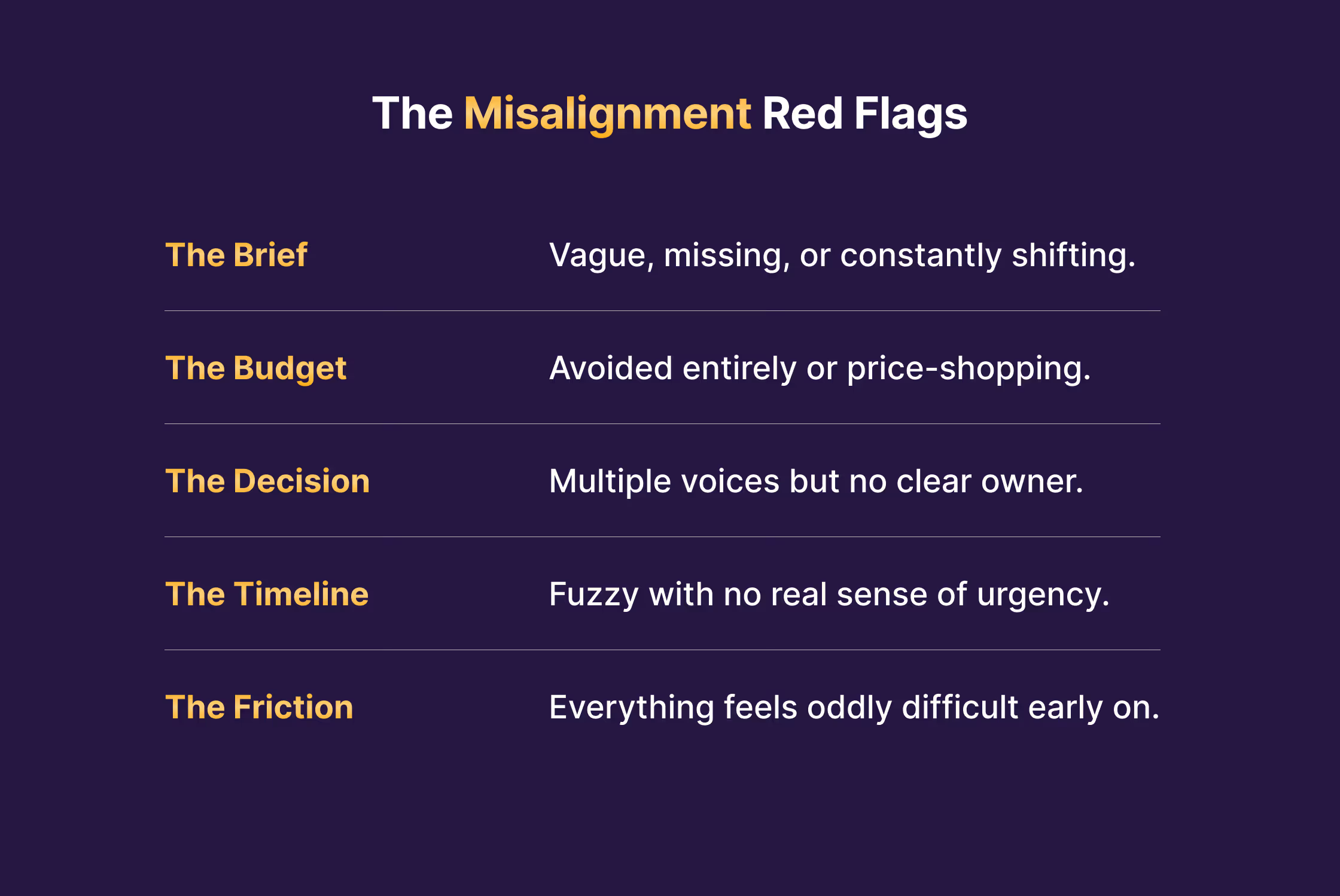
But nine times out of ten, ghosting has absolutely nothing to do with the quality of your work. Instead, it’s a glaring signal that something was off from the very beginning. The signs are usually there if you know where to look:
- The initial brief was vague or non-existent.
- Nobody wanted to talk about the actual budget.
- Multiple people were involved, but no one owned the final decision.
- The project timeline was fuzzy or constantly shifting.
- You were just one of several options in a price-shopping exercise.
None of these scenarios feel great. But once you accept that ghosting is usually a symptom of early misalignment, you can start spotting the red flags before you waste your weekend.
The ghosts we’ve all met
Not all ghosting looks the same. But some patterns repeat themselves.
The “Surprise” ghost
They reach out. You reply. Then: silence.
Strong opener, no ending.
Netflix would cancel it.
The “Budget” ghost
“Can you send over your prices?”
You do.
Silence.
They’re now negotiating with their cousin’s friend’s dog walker.
The “Slow Fade”
Call 1: Great energy.
Call 2: Even better.
Call 3: “Let’s talk next week…”
But next week never came.
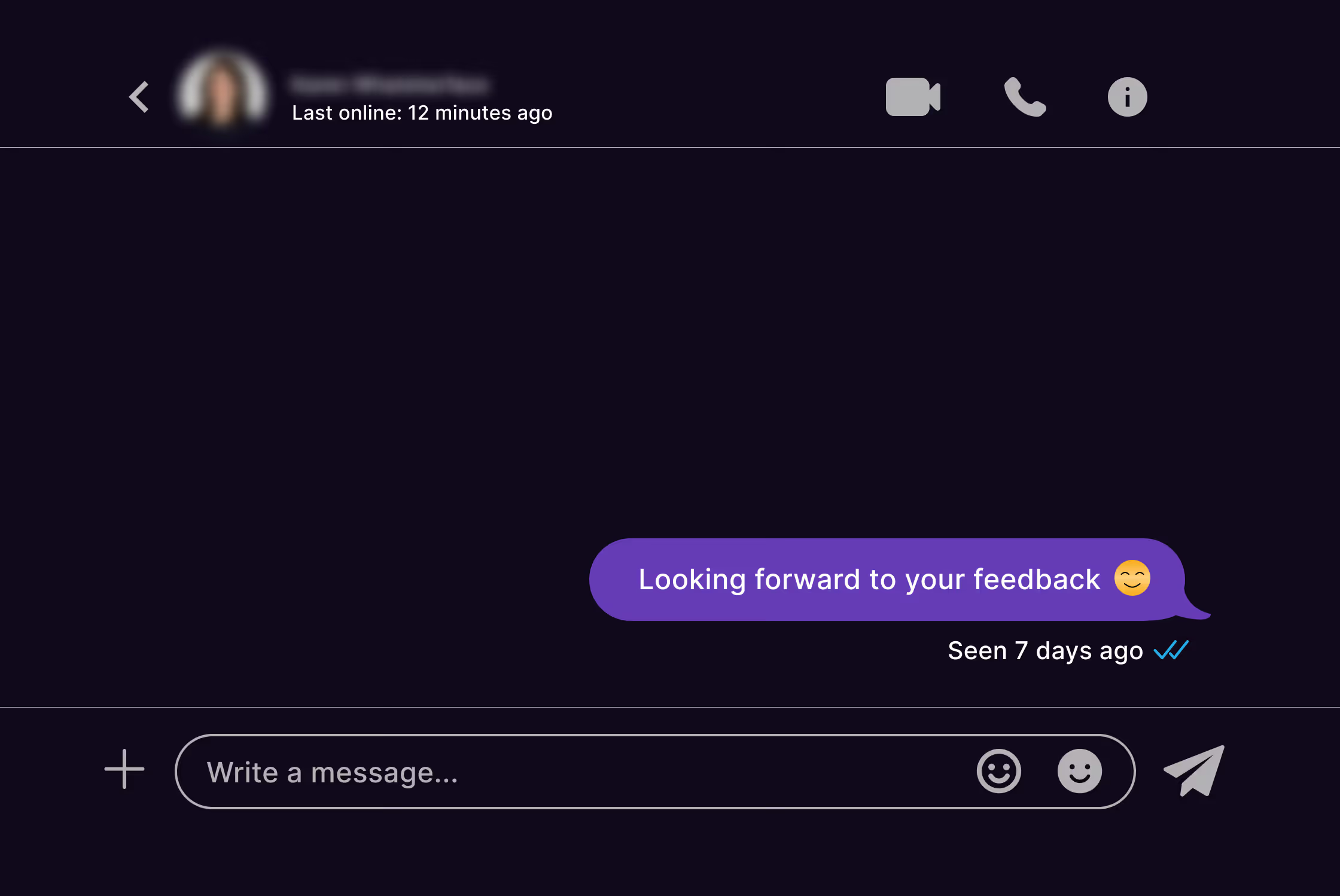
Not ghosted. Just left on “seen” for eternity.
The “Nice but Gone” ghost
“This looks amazing! You’re amazing. Let’s definitely do this.”
And then… nothing. They ghosted politely.
With 3 heart emojis, a glitter trail and a LinkedIn endorsement.
The “Pitch Collector”
You pitch. You even design something.
They ghost. Your concept shows up, two weeks later, slightly worse.
At least change the font, Kevin.
If you’ve been in this space for a while, you can probably add a few more to the list.
Let’s be honest. It’s not just clients.
It’s easy to point fingers. But this isn’t a one-sided issue.
Agencies and freelancers don’t always handle things perfectly either. Leads get quietly deprioritised. Follow-ups get delayed until they feel too awkward to send. Pricing goes out, and conversations just mysteriously stop.
At Brands Untamed, we made it a hard rule early on to always close the loop, even if the answer is no. But we’ve been around long enough to know that’s not always the norm.
Practical tips for service providers
You can’t force people to reply, but you can drastically reduce how often you get left hanging. It all comes down to guarding your time and qualifying your leads.
- Ask about budget ranges and decision-makers on the very first call.
- Test the urgency by establishing a clear timeline before doing free work.
- Agree on a specific next step before you hang up the phone.
- Stop overdelivering for leads who haven’t shown any actual commitment.
- Trust your gut if a project feels oddly difficult or vague straight out of the gate.
Qualifying harder protects your margins, your mental energy, and leaves room for the clients who actually value your expertise.
Practical tips for clients
If you’re on the hiring side, remember that your reputation with vendors matters just as much as theirs does with you. The best creatives talk to each other.
- Don’t request full, bespoke proposals if you’re still exploring.
- Be transparent if your budget is uncertain or the project is delayed.
- Send the awkward “no thank you” email; it takes thirty seconds and earns you massive respect.
- Remember that even early-stage thinking and pitching takes real human effort and time.
The right match matters
Instead of asking why someone ghosted you, the better question is often: was this ever genuinely the right fit?
In the end, successful branding and communications work relies entirely on trust, clear communication, and mutual respect. Ghosting is just the universe’s extremely irritating way of filtering out the wrong matches.
By recognising the signs early, we can all spend a lot less time chasing ghosts, and a lot more time building brilliant things together.
Looking for a branding partner who actually replies? Let’s chat about your next project.




.avif)


