


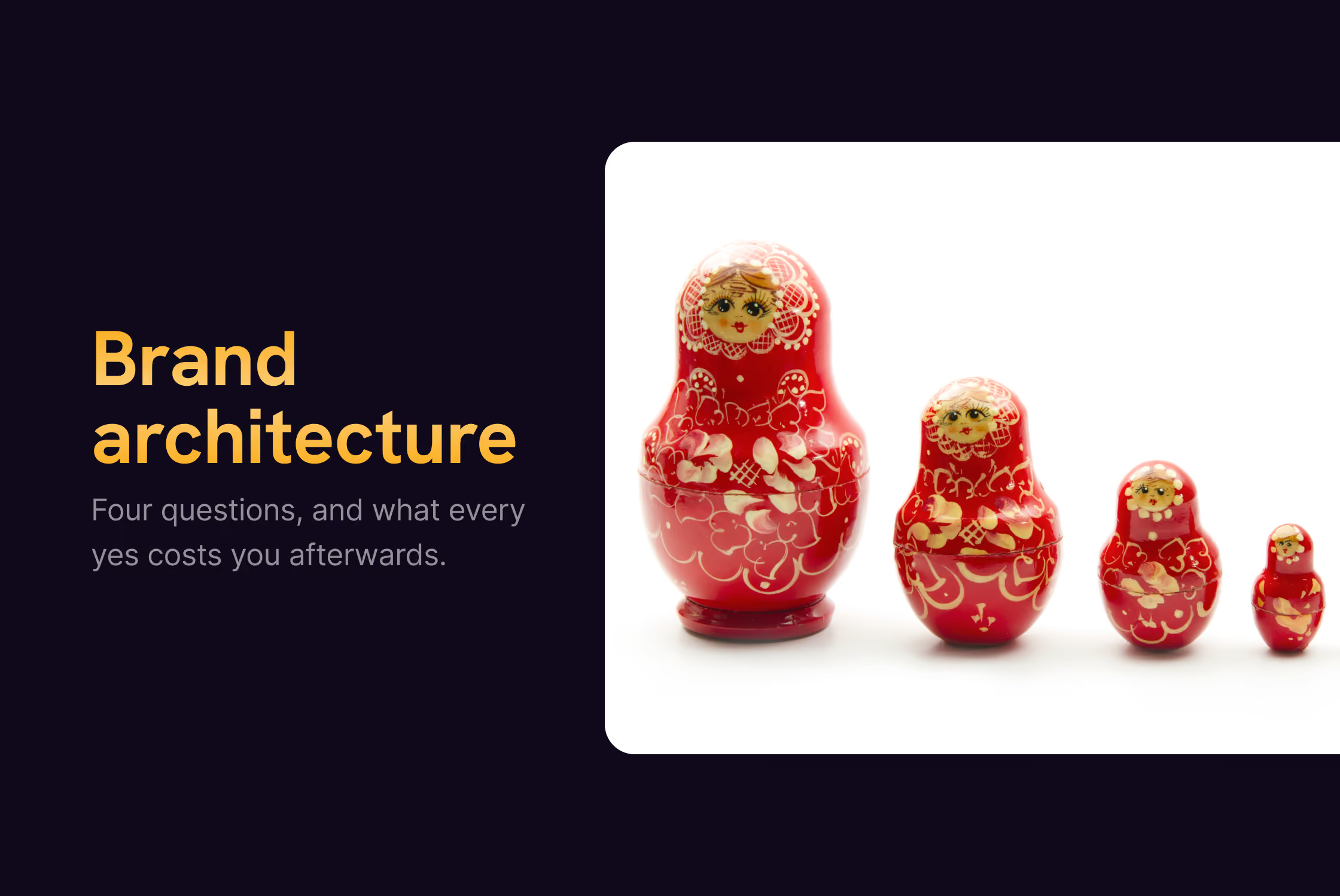
Somewhere on your shared drive there's a folder called "Logos".
Inside it are somewhere between eight and forty files. You can confidently say what half of them are for. Two belong to projects that closed before anyone had heard of a pandemic. One is a campaign nobody remembers approving. And there's a file called "logo_FINAL_v3_new.ai", which is either the current one, or very much not.
Nobody decided any of this, and that's the whole point. Nobody sat down in year one and chose a structure. What happened is that roughly twice a year somebody with a communications budget asked a perfectly reasonable question, which was "can we have a logo for this?", and roughly twice a year nobody had a good reason to say no.
That accumulation is your brand architecture.
The short answer
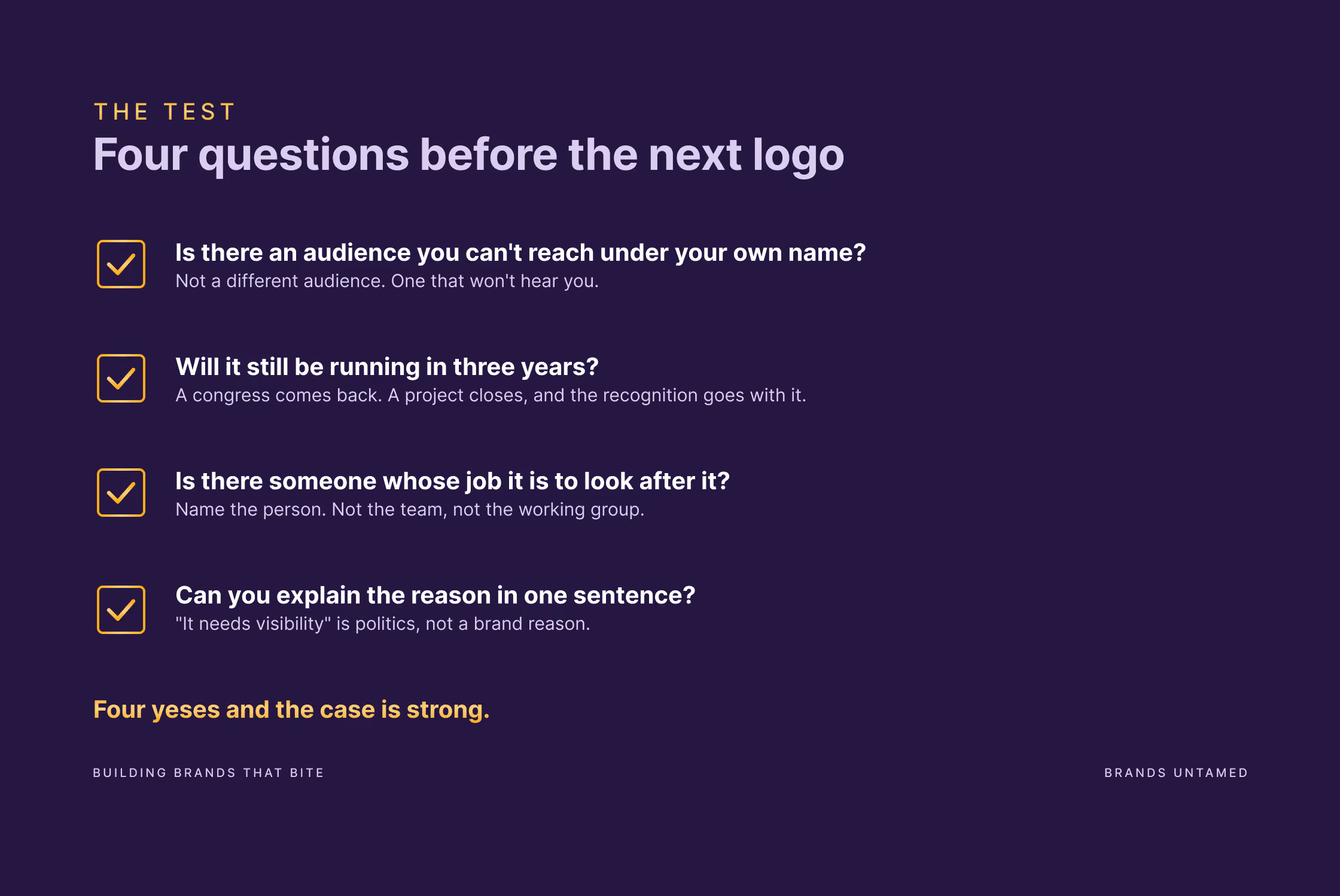
Brand architecture is how you decide what gets its own name and logo, and what simply carries yours. Four questions settle it.
- Is there an audience you can't reach under your own name?
- Will it still exist in three years?
- Is there a named person whose job it is to look after it?
- And can you explain the reason in one sentence to somebody outside your organisation?
That's our starting test. Four yeses and the case is strong. One or two and you're often looking at a project name rather than a brand. What follows in this article is how to run that test on what you've already got, and what every “yes” costs you each year afterwards.
What does brand architecture actually decide?
It decides who wins the logo argument before the argument starts.
Without a rule written down somewhere, the answer tends to go to whoever asks most often, or asks loudest, or happens to have a design line in their budget. A campaign gets a logo because its Comms Lead or a member company pushed for one. A working group doesn't, because nobody thought of it. Neither outcome had anything to do with whether it made sense.
This is a different question from what a logo, an identity and a system each are, which we've unpacked before. That one's about a single identity and how far it stretches. This one's about how eight or forty of them relate to each other.
What are the four brand architecture models?
Most articles on this subject use the same two or three American examples. You've read those by now, surely. So, we’ll use our own version, in the same way we explain this to clients. .
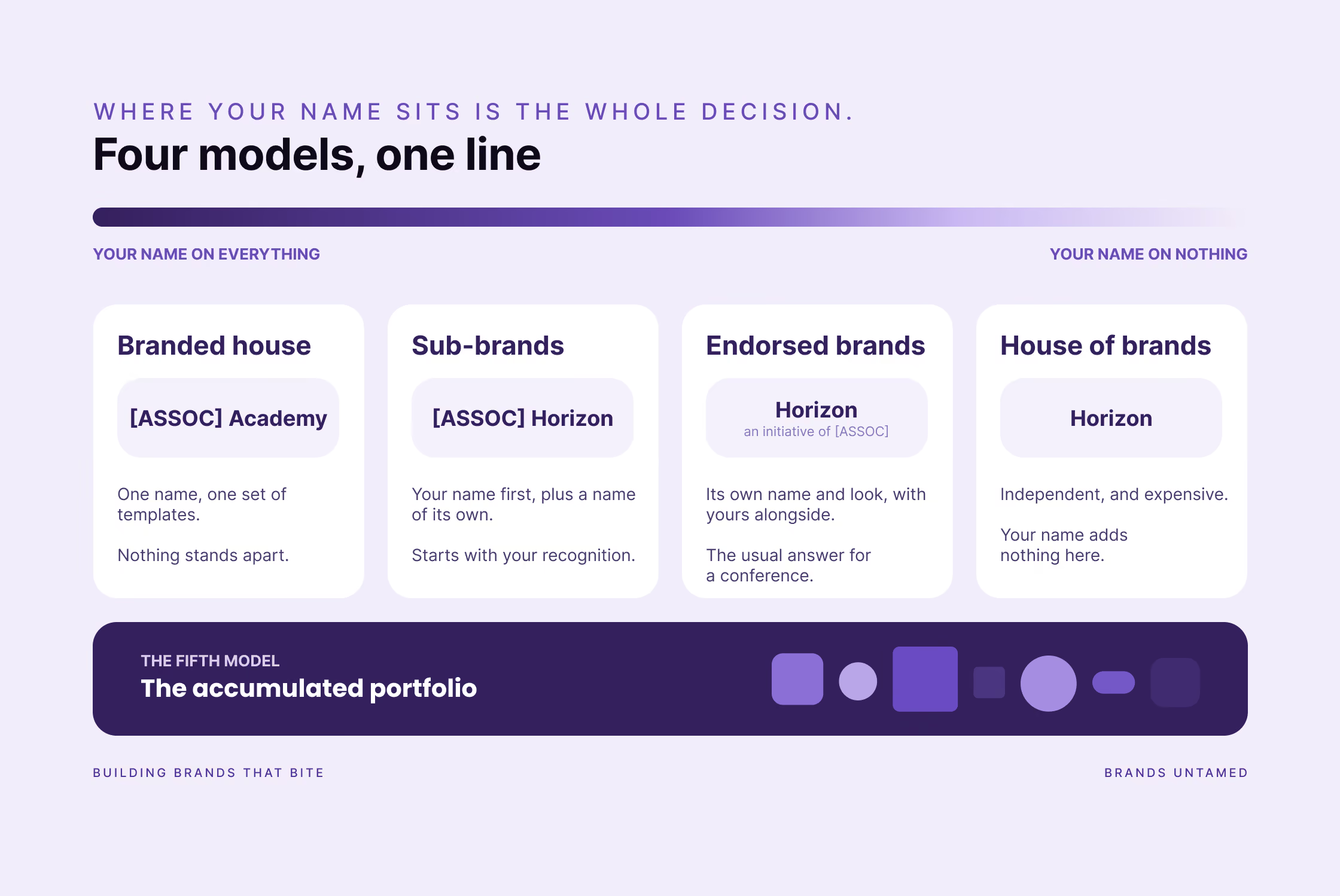
These four names are worth knowing mainly because they give everyone the same words in a board meeting. They sit on a line, running from your name on everything to your name on nothing.
- Branded house. Everything uses your name, followed by a word that says what it is. Your conference is the [Association] Annual Congress. Your training programme is the [Association] Academy. The advantage is that everything you publish builds the same name, and you only maintain one set of templates. The trade-off is that nothing stands out, and anything aimed at people who don't already know you starts from your name instead of its own.
- Sub-brands. The new name has your Association’s name inside it, plus a name of its own rather than a description. [Association] Horizon instead of [Association] Academy, with its own logo built from your colours and type. You're still the first word, so it starts with your recognition, and it gets something to be remembered by separately.
- Endorsed brands. The new name stands on its own, with yours visible on the materials. Typically as "an initiative of [Association]" or your logo sitting alongside. It gets room to have its own character, and you get the credit for it. This is what we recommend for association conferences, and we've made that case in detail. In practice, nobody agrees where endorsed ends and sub-brand begins, so don't spend a meeting on it. Decide instead how prominent your name is, and which materials it has to appear on.
- House of brands. Each brand has its own name and look, and yours stays out of sight. Procter & Gamble owns Ariel, Pampers and Gillette, and none of them needs you to know that. It works very well when the products serve completely different people and the parent name adds nothing to any of them. It's also the most expensive way to operate, because every brand needs its own marketing, its own website and its own audience built from scratch. Associations and professional firms have less reason to work this way, because your name is usually what people are actually buying.
And then there's the fifth model, which never makes it into the deck because nobody designs it on purpose but it is how a lot of organizations operate in practice.
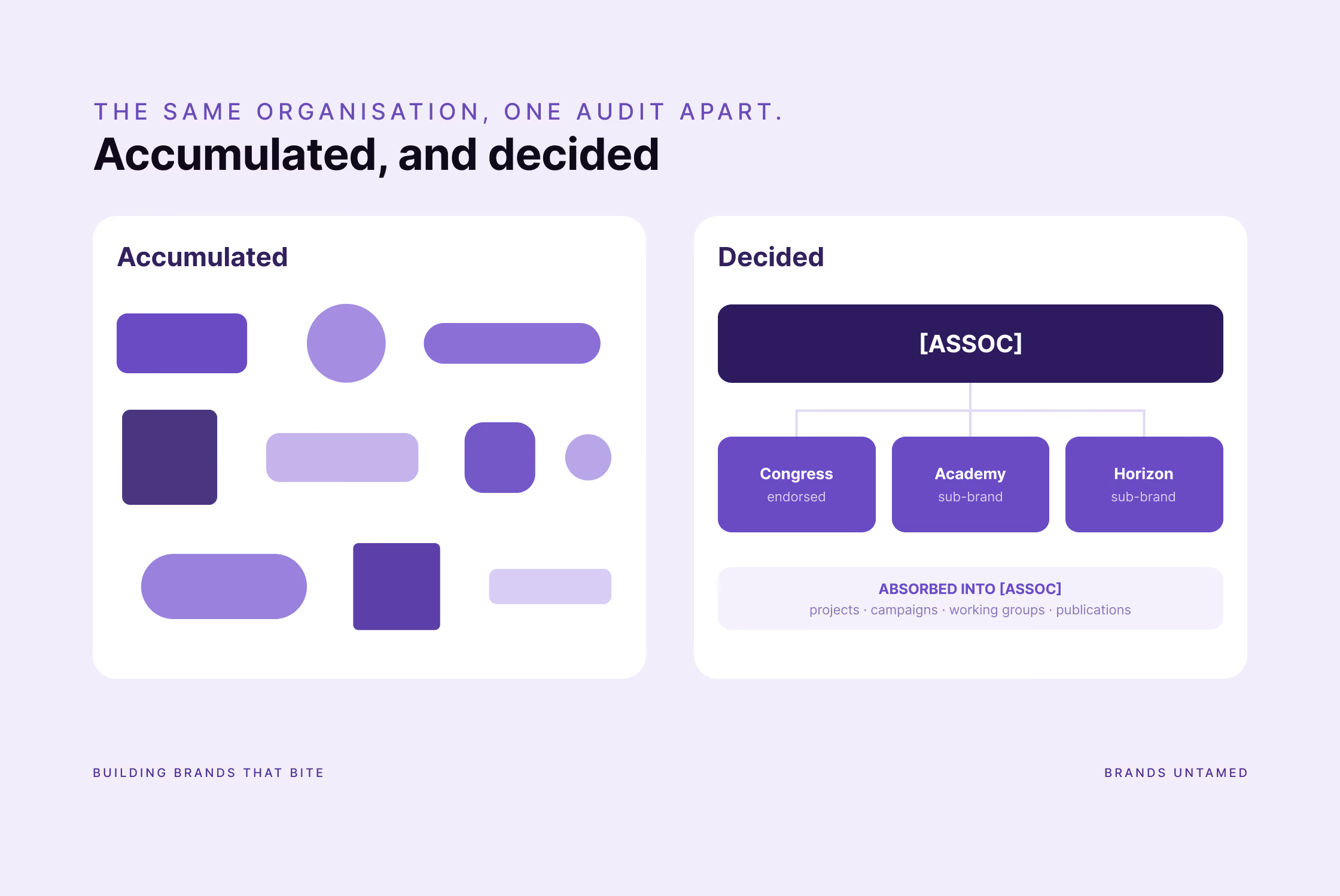
- The “accumulated portfolio”. A branded house with somewhere between three and eleven exceptions. Each had a good reason at the time. None was ever checked against the others. They were approved in different years by different people, half are no longer maintained, and at least one sits on a domain that keeps trying to renew automatically but the admin address belongs to someone who left in 2022.
If that sounds like you, don’t worry, you’re in a typical team. Most of the work isn't choosing between the four models above, but going back through the exceptions and deciding which ones you'd approve again today.
When has something earned its own brand?
Four questions. Usually all four need a yes.
Is there an audience you can't reach under your own name?
Not a different audience. An unreachable one.
If the people you're after would open the email, take the meeting or read the report with your existing name on it, a separate name gives you nothing extra and costs you the recognition you already had. So the question is whether your own name is a liability with this specific group. Sometimes it genuinely is. A trade federation launching something for consumers has a real case, because consumers tend to read anything from a trade body as lobbying. That same federation launching a campaign at the policymakers it's been talking to for fifteen years does not.
Will it still be running in three years?
This one separates a conference from a project.
Your annual congress comes back every year. Each edition adds to the last, so members start recognising the name and the look before they've read the invitation. That's worth building something for. A three-year project that ends with a final report and a closing conference usually doesn’t get that same long-term return. Whatever recognition it builds disappears with it, and in the meantime it starts from zero instead of borrowing yours.
The usual objection is that the project needs visibility. It does, and it can have plenty of it under your name. Visibility and a separate identity are two different things.
The exception is a campaign you plan to re-run every year or an EU project built for people who've never heard of you, where the audience question outweighs this one.
Is there someone whose job it is to look after it?
Name the person. Not the team, not the working group. The person.
An identity with no owner turns into a set of files nobody updates when the parent changes its typeface. You find out about it two years later, when a member sends you a document that looks nothing like anything else you produce.
Can you explain the reason in one sentence?
Try finishing this out loud: "This needs its own name and logo because…"
If the ending is "it needs visibility" or "the partners expected it" or "the budget included design", those are reasons, but they're internal politics rather than a brand decision. Which is fine, and sometimes you act on them anyway. Just write them down as political, so that whoever reviews the portfolio in four years knows what they're looking at and why.
A stronger brand reason sounds more like: "people search for it by name and don't connect it to us", or "it's aimed at people who've never heard of us".
What does a sub-brand cost you every year?
The design fee is the part that ends. Everything after it comes back annually.
- A domain, its renewal, and eventually either a migration or a redirect.
- A set of templates, which has to be redone every time the parent changes anything. Multiply by the formats you use: report, deck, social, signage, email.
- A social account (or more), which somebody either feeds or explains the silence on.
- The name variation in every language you work in, including the versions where it means something unfortunate.
- A trademark class, if you register it. An EU trade mark costs €850 filed online with the EUIPO for one class, and lasts ten years before renewal. That's the figure at the time of writing, and it's the only line here with a published price, so it's the only one you can check in a minute.
- A line in every induction, brief and agency handover, for as long as it exists.
Your own search results
Here's one you can check today. Search your organisation's name alongside the topic you most want to be known for. Count how many of the results are your own sites. Then look at which one the search engine put first, and ask whether that's the one you'd have chosen.
When several of your own sites answer the same question, you're not covering more ground. You're dividing the recognition you already built between pages that each carry a share of it, and leaving the reader to work out which one is really you. Search engines usually rank one ahead of the others, and AI assistants tend to pull from whichever they read as the main source. Neither is guaranteed to pick the one you would have.
How do you audit a brand portfolio?
An afternoon for most organisations, and you can do it without us.
- List everything with its own logo. Projects, campaigns, events, awards, member schemes, publications, the newsletter someone drew a mark for in 2019. Include the ones you think are dead, because dead ones can still hold live domains.
- Ask the four questions about each one, and count the yeses.
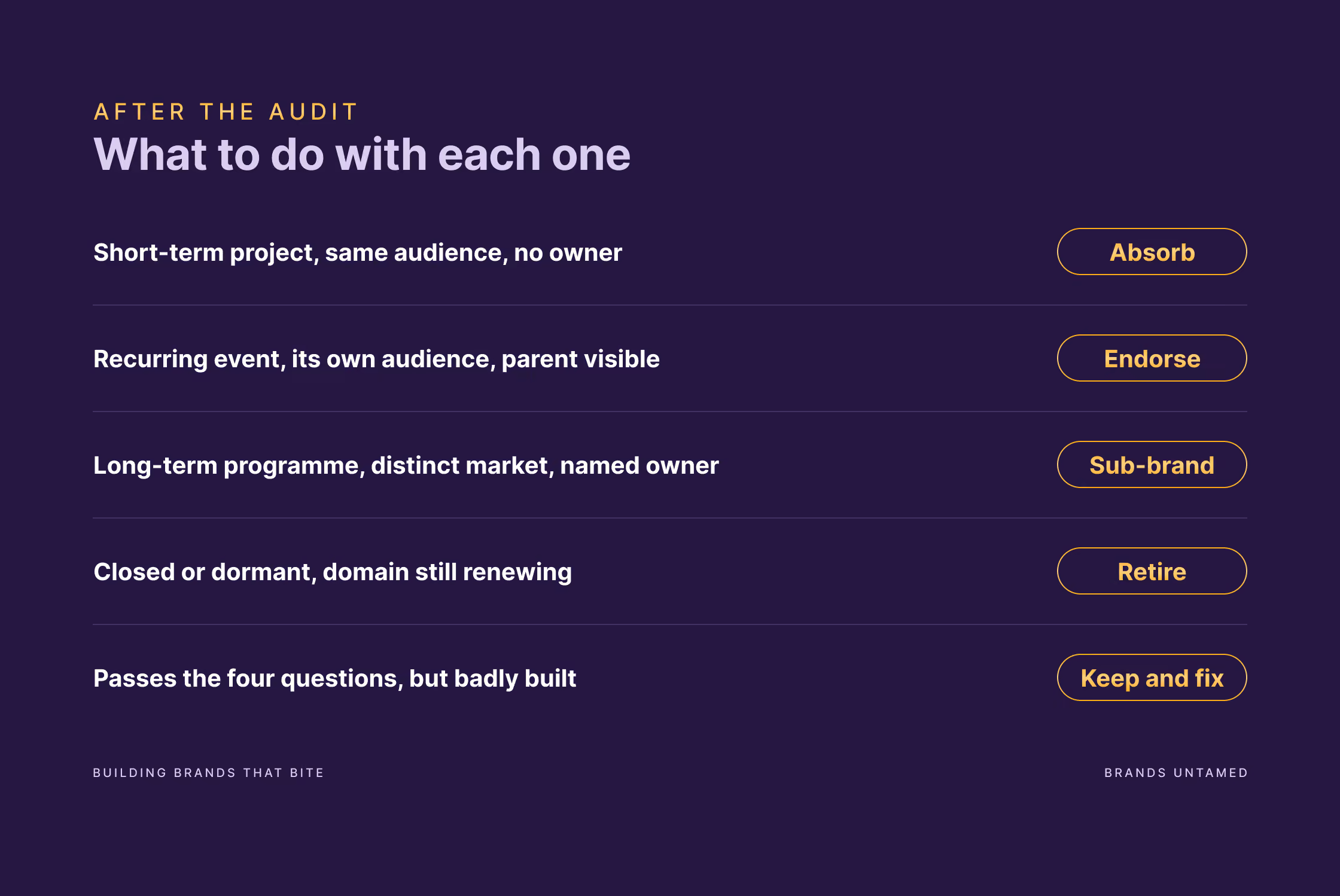
- Sort each into keep, endorse, absorb or retire. More on those below.
- Add up what the keeps cost you a year. Domains, templates, accounts, languages, registrations. Now you've got a number, and a number is what gets decisions made.
- Take the list to whoever signs off.
You'll probably find that two or three genuinely pass. That's normal, and those are worth investing in properly.
What do you do with the ones that don't pass?
Absorb. The name stays as a name, and everything it produces uses your identity. This is the right answer for most of them. Expect some pushback from the people who worked on it, because from the inside it can feel like their project is being downgraded. Worth saying out loud that the name isn't going anywhere, and that it now has yours behind it.
Endorse. It keeps its own identity, and your name goes on it properly and consistently. Sub-brand is the same move with your name more prominent. Good option when something genuinely reaches its own audience but you're currently getting no credit for it.
Retire. Redirect the domain, archive the files, stop. Do it in one move. A brand that dies by neglect leaves a live website nobody updates, which is worse than no website at all.
Keep and fix. Some pass the test and are simply built badly. That's a design job.
On timing: these changes go down much more easily when they're part of something the organisation already expects. A rebrand, a strategy cycle, a new website, a merger. Done on its own it hands everyone who liked their logo a single thing to push back on.
Who decides next time?
The audit clears what's already there. It doesn't stop the next one arriving.
Three decisions prevent that, and they take a meeting, not a project. One named person owns the portfolio and signs off anything new. The four questions become the form they answer, written down somewhere people can find it. And the portfolio gets reviewed once a year, ideally alongside a budget round, because that's when everyone is already justifying their spending anyway.
The version that works looks boring: one page saying who asks, who decides, and what they have to show. It means the next person who wants a logo gets an answer instead of a negotiation.
FAQ
What is brand architecture in simple terms?
It's how all your names and logos relate to each other. Which parts of your organisation carry your name, which have their own, and how the two connect. It's about the relationships rather than what any single logo looks like.
When should you create a sub-brand?
When you can answer yes to four questions: there's an audience you can't reach under your own name, it will still be running in three years, someone specific is responsible for maintaining it, and you can explain the reason in one sentence to somebody outside the organisation. Four yeses and the case is strong. One or two and it's usually a name instead of a brand.
Should our annual conference have its own identity?
Yes, in most cases, with your name visibly on it. A recurring event builds recognition edition on edition, which is exactly what justifies building something for it.
Does every project need its own logo?
No, and most don't. A project with an end date starts from zero and takes whatever it built with it when it closes. It's usually better off highly visible under your name, which gives it your recognition from day one. The exception is a project aimed at people who've never heard of you.
What does a sub-brand cost to maintain?
Domain, templates that need reworking whenever the parent changes, a social account that needs feeding, the name in each working language, and any trademark registration. An EU trade mark is €850 online with the EUIPO for one class, renewable every ten years, at the time of writing.
What about names we inherited in a merger?
Same four questions as anything new. The one they usually fail is the third, because nobody is responsible for them, and making someone responsible would mean deciding what to do with them. Post-merger architecture has its own complications and deserves its own article, but the questions don't change.
Is a branded house always the safer option?
It's usually cheapest to run and easiest to keep consistent, which isn't the same as always being right. It stops being the right answer when your own name is genuinely in the way with an audience you need to reach.
Where do you start?
Open the folder. The one called "Logos".
Count what's in it, and for each one ask the four questions. You'll know within an hour whether you've got an architecture or an accumulation, and you'll have a list worth taking to a board.
We work with associations, federations and companies whose portfolios grew faster than anyone planned for. Get in touch and we'll tell you candidly which it is. Or connect with Hans and Ralu on LinkedIn, if you'd rather keep an eye on us than email us.